Showing posts with label Presence. Show all posts

Monday, June 6, 2016

Review: The Sanctity of the Mundane


This review first appeared on the Englewood Review of Books.


Rob Bell, in his latest book, How to Be Here, explores how to create a life worth living through being present in the here and now. It addresses ideas that are becoming quite popular, likely because of their relevance for our modern culture and way of living. Bell continues with his strong, engaging writing style and story telling, so fans of his approach will likely appreciate this text, as well. His style should open up ideas to new audiences. At the same time, the book could be better organized to make his point clearer and send the message “home” more effectively.

As noted, Bell provides his usual writing that is engaging, accessible, and engrossing. His passion comes through clearly, and the personal anecdotes enliven abstract ideas. The short sections make the text easily digestible while allowing for pauses in reading, when needed. He is an incredibly effective story teller, and his success in many areas reflects this skill. It is once again displayed very well in How to Be Here.

The biggest challenge in this particular book is that, in many ways, it feels like a collection of short essays that are loosely connected, but could really stand on their own. I frequently found myself asking, “What is his point? Where is he going?” I struggled to find an overall thesis and direction. The book is subtitled A Guide to Creating a Life Worth Living, although interestingly, that subtitle doesn’t appear on the cover to provide some clarity. In hindsight, the title does summarize the thesis and purpose of the book, mentioned above: Create a life worth living through being present in the here and now. However, there are several sections that dive into other sub-theses and concepts, like ikigai, a Japanese word for what gets you out of bed in the morning, motivated to take on the day. There are great ideas and discussions he presents, but they don’t feel fully realized over the course of the entire book. This is what contributes to that essay anthology feeling.

A short introduction providing a direction/thesis and tying all the parts together would have done wonders for the coherency of the narrative across the entire text. On the other hand, Bell's style traditionally tends to be conversational, and his ultimate point isn't often known until his work is done. This works well for his short Nooma videos or even longer sermons. A book is a different experience, though, and making a clear direction, even if the conclusion is still a surprise, is really critical for reader engagement and comprehension. He also doesn't go back and clearly connect all the dots on the backend, which would at least have provided retrospective coherency.

All that aside, the points he was trying to make were strong. In many ways, the text reminded me of a modern version of Brother Lawrence's Practice of the Presence of God. Bell illustrates this very well, in his unique, engaging style, emphasizing examples of and the power of being present in the moment, seeing the sanctity of the mundane, helps us experience life more fully and find meaning.

Indeed, there are many faith and cultural traditions, within and without Christianity, that have taught these lessons. The behavioral sciences have picked up on these principles in the past decade, generally describing them under the umbrella of mindfulness, and plenty of research has reinforced the truth of these claims. From that perspective, there isn't much new in Bell's text, although he doesn't necessarily claim that he is coming up with a new idea. In many ways, he is a story teller to illustrate and convey principles in new ways. And Bell has always been excellent at this. This story telling to bring abstract principles to life is what How to Be Here does best. 

At the same time, the book full title: How to Be Here: A Guide to Creating a Life Worth Living is misleading, as it isn’t really a guide, at least not in a traditional sense. There are no steps, no real recommendations; just stories. A reader could easily walk away from the book wondering what they can really do to be here. Bell’s stories have examples, but they’re highly contextualized and therefore not necessarily generalizable. There are plenty of more concrete guides to mindfulness and presence that lay out example activities, prayers, exercises, etc. that can help us be more mindful and present in the moment. A potential downside of these materials is that they can be viewed prescriptively and formulaically, which is definitely a problem.

Perhaps this is why Bell takes a different approach. In reflection, an implicit part of his message seems to be that there is a journey, a story, to being able to be effectively present and create a life worth living. His initial and most enduring metaphor is in writing a story of our lives, starting with the blinking line on an electronic page. There is great truth to this approach, and frankly, I think it is truer than any activity, exercise, or form of prayer, as it is frequently in the doing of things that we lose our presence and sense of meaning. Yet many people need some examples of things to do to practice this sort of thing. Bell’s book can be complementary to these other, more traditional guides, with them providing practices, while he helps build motivation and weightiness to value of such practices.

In the end, How to Be Here is a book with meaning and value, but it doesn’t sit on its own well. Additional structure to orient the reader what the purpose of the book is, and ensuring all points are clearly connected would have strengthened it significantly. As it is literally advertised as a “how to” book and a “guide,” reference to other resources would have helped, as well. Even explicitly discussing the power of narrative and journey over practices, as I noted above, would have helped improve Bell's thesis and purpose.


This text is probably best for people who don’t necessarily need suggestions on what to do different (many of us know what to do), but need reminders of priorities and that mindfulness and presence is really quite worthwhile.

Disclosure of Material Connection: I received this book free from the publisher. I was not required to write a positive review. The opinions I have expressed are my own. I am disclosing this in accordance with the Federal Trade Commission’s 16 CFR, Part 255: “Guides Concerning the Use of Endorsements and Testimonials in Advertising.” 

Monday, July 28, 2014

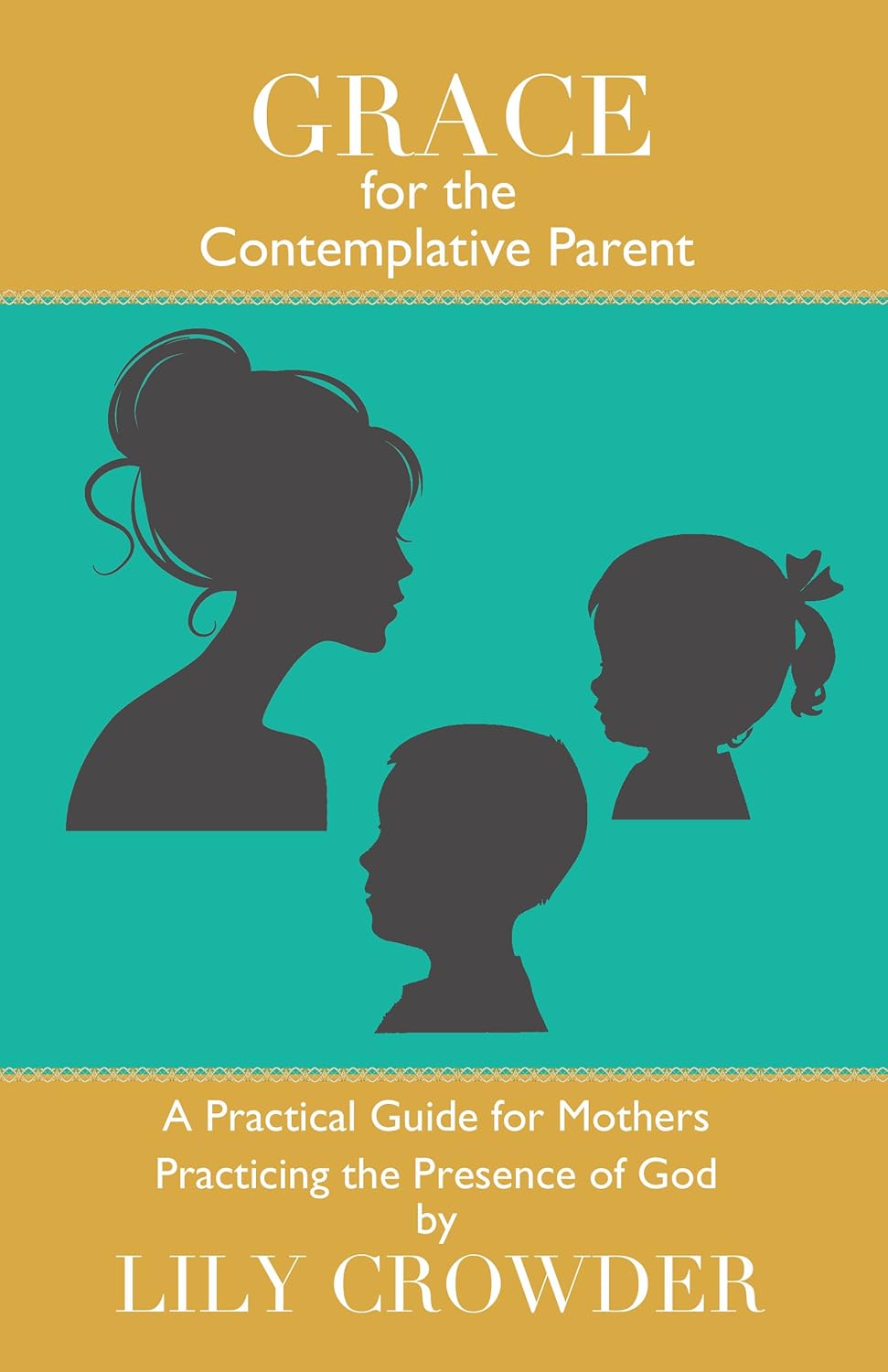
Book Review: Grace for the Contemplative Parent #SpeakeasyContemplativeParents

One of the spiritual formation concepts most dear to my heart is Brother Lawrence's practicing the presence of God. It is core to the Incarnational stream that Richard Foster describes in Streams of Living Water and feels like my spiritual home. For these reasons, Lily Crowder's book, Grace for the Contemplative Parent: A Practical Guide for Mothers Practicing the Presence of God caught my attention.

Crowder does a nice job of applying Brother Lawrence's concepts to the daily life of parenting. She will also probably make many mothers feel quite validated through struggles of the daily grind of life with kids. The points were good and could be powerful, although I didn't feel like there was anything particularly new in what I heard, even though I need to remember to give myself room for grace in many of these same circumstances. Many of the ideas were similar to ones I have conveyed to parents during the course of family therapy, which was validating to me, but not necessarily helpful in my own growth. Since I can still struggle with practicing God's presence, I was hoping this book would give me some new outlook that would translate to transformation. One of my reflections during the book was remembering that insight doesn't necessarily lead to behavior change. Learning something new about ourselves and the world is good and important, but sometimes we need practical skills to actually experience something different.

Even though the main title is "parent," the subtitle is "guide for mothers," and Crowder acknowledges early on that these principles are relevant to all parents, but she is targeting mothers. This is my biggest complaint. During our adoption process, almost all adoption resources were targeted at mothers (you'd be amazed at how many were pink and literally flowery--and my wife doesn't really like either). I felt really left out and invalidated, and I was just as active. Most parenting resources are similarly targeted toward mothers. Thankfully, there is increasing recognition that fathers are often active (and important) in parenting. I don't think it would have been that difficult to make this book more inclusive of fathers, and it would open up another huge audience. And believe me, fathers need grace, as well.

Disclosure of Material Connection: I received this book free from the publisher. I was not required to write a positive review. The opinions I have expressed are my own. I am disclosing this in accordance with the Federal Trade Commission’s 16 CFR, Part 255: “Guides Concerning the Use of Endorsements and Testimonials in Advertising.”

Monday, April 18, 2011

Jesus Can Be Hard to Find in the Present

Over the past few years, I have come to deeply appreciate the value of living in the present and not always the future. When I came across Warren Wiersbe's Jesus in the Present Tense: The I AM Statements of Christ, I was very intrigued. I've always loved hearing the various names of God and their significance. Using them as a devotional to see God around us all the more is awesome.

The book starts out great, emphasizing the importance of names, including that of God. I particularly loved the exploration of people who know God but have not known God's name for various reasons (this could be a full separate conversation).

In the preface, Wiersbe that Jesus "is alive and says, 'I AM.' He can meet our needs today. He is alive this very moment and offers us a satisfying spiritual life in the present tense" (p. 11) He explains that the simple statement, "I AM," emphasizes the present nature of Christ, which is a reflection I had not noticed, but think is powerful.

Unfortunately, the rest of the book does not really seem to focus on the present nature of Jesus. The names of Jesus and subsequent exploration of their meaning is fine, but they're not that significant. Most of the time, it simply feels like a new way to present conservative evangelical theology. It's a much more organic way of doing so with some devotional elements, but it honestly feels more didactic than devotional.

Ironically, halfway through the book, Wiersbe states, "As important as doctrine is, it isn't enough for us simply to affirm what we believe. We must realize that Bible doctrine is incarnated in the Son of God and that He through the Spirit makes each doctrine real and active in our lives" (p. 103). This is an amazing statement that I think really is the motivation for the book. While we need to know what we believe and why we believe it, our faith is not living or effective if it is not vibrantly present in our daily life in the context of relationship. Again, though, this book just seemed to miss this focus consistently.

Just prior to the above quote, Wiersbe states the following, already in italics: "He moved the resurrection out of a statement of faith and into a person, and out of the future and into the present" (p. 103). This is a great reflection that we should all remember!

Note: I received a complimentary copy of this book in exchange for a review (with no obligation for a positive review).

Tuesday, January 11, 2011

Brother Lawrence's Feast Day

Today in the liturgical calendar marks the feast day of Brother Lawrence, a strong influence in my life and this blog. He wrote The Practice of the Presence of God, focusing on experiencing and seeing God's presence in everyday life. This practice is one of the simplest, yet most complex and meaningful. I believe it is the foundation of an Incarnational life.

In celebration of Brother Lawrence, try to take some extra time to focus on how God is present with you in everything you do today. Share any experiences and insights you have here!

Sunday, December 12, 2010

Technological Contemplation & Presence @LifeDiscipler @FCStores

Since I read Present Perfect a few months ago, I've been looking for some way to remind myself to remain present intermittently throughout the day. In that book, Boyd talks about how he gives himself reminders to stay present and attentive to God. Staying present is something that is very difficult for me, as I can become easily distracted. I searched for some applications for my Android phone, but nothing quite worked.


Then a short time ago, in a Family Christian Stores brochure, I saw a listing for the LifeDiscipler. It is a little gadget that feeds you a Bible verse every 15, 30, or 60 minutes (of your choice). At the selected interval (and you can turn the device off completely), it beeps at a soft or loud volume (or you can silence the alert) to let you know you can read another verse.


In many ways, this is exactly what I was looking for, so I purchased one from a Family Christian Store. I currently have it set to 30 minutes, which feels generally perfect to help me remain mindful of and stay in God's presence. I would really love if it could have a vibrate setting. Working in a mental health setting where all devices have to be silenced, I simply have to leave the LifeDiscipler in my office. While I wouldn't be able to read the verse during a therapy session, just the vibration would help me remember to be present. Additionally, even the loud setting can be too quiet at times (I missed it going off doing some Christmas shopping). The vibration option could help prevent this.


They are developing iPhone and Android application versions of LifeDiscipler, so we may see the vibration feature there....


The other really neat benefit is that the 1500 verses from 5 translations (NIV, TNIV, NKJV, NLT, CEV) are broken up into 44 categories, so you can choose what theme you want to receive verses from. This helps meet individual and immediate needs more effectively.


The LifeDiscipler goes for $30 on the LifeDiscipler website, although they are advertising a 20% coupon code (CHRIST20) through December 17. They are offering a 30% off coupon code (LIFE30) via the Facebook page. Family Christian Stores had it for $25 when I purchased it, although it's on sale for $20 right now. Ultimately, this seems overpriced. The basic technology is simple, and the plastic does not seem like the highest-quality. However, it does not feel like it would break in the time I've used it. It seems more like a sub-$10 product, especially compared with various youth games with more detailed screens and controls. At the same time, the price seemed worth it to me for the benefit I got (although I almost didn't purchase one because of the price).


[I provided the creator of the LifeDiscipler with a preview of the review, and he provided this clarification of the product manufacturing process and resulting cost:
The LifeDiscipler is actually made with high density ABS (very tough plastic - more expensive as well) and the lens is protected by a polycarbonate lens (best clarity and most durable)... we selected the best plastic possible (the weight of the product is light and oftens gives the impression of a lesser quality part - so it's understood why you said that). And the price is a direct correlation to our cost and the volume we produce. Since we are a brand new company with one product, our product costs are much higher than a company that produces 50k units. Many of the games you mentioned started out at double their current retail price (like 20Q for example).
The LifeDiscipler is a way that emphasizes how technology can truly help us become more contemplative and practice the presence of God.

However, the name implies we can become a disciple simply by reading Bible verses occasionally. As I discuss on this blog, that's obviously not true. The packaging and website also advertise how it can provide life answers as we need them. I think that's an overstatement, especially as the verses are not read within the larger narrative. However, they are chosen well to be able to stand on their own as much as possible.

Nevertheless, I think the name is clever and fine. It's good marketing. And as long as we don't over-rely on any one tool, the LifeDiscipler can help us become better disciples by reminding us of God's promises, God's presence, and God's word. I will continue to use it on a daily basis.

Wednesday, September 22, 2010

The Sin of Holiness

According to Richard Foster in Streams of Living Water, the holiness stream is a focus on the virtuous life, as in right living and purity from sin. This perspective develops from the Wesleyan holiness movement that focuses on sanctification by avoiding sin and being morally pure.


Is this perspective in the Bible. Absolutely. God wants us to avoid sin. However, being morally pure does not guarantee that we are close with God. Just read the Gospels regarding the Pharisees and Paul's writings.


Being holy is not the same as being morally pure. Sacred is a better synonym with holy.


To be holy or sacred is to be made special for God. We can be set apart by being morally pure. However, God, through Christ, makes us holy. Regardless of our behavior.


As I also discussed in yesterday's post on confession, we often focus too much on sin and not enough on moving closer to God. There, of course, is a balance, as sin and God don't do well together. However, as Christ did many times on earth, he will also come to us in the midst of sin. And frankly, that's when we experience God the most. Christ physically came to those who were sinning. He didn't come to those who were pure.


Of course that doesn't mean we should sin in order to be with God. However, in many attempts to remain pure, we often blind ourselves to experiencing God, as was my experiencing with fasting. As we seek to do things for God, we often forget to be with God. While we do need to combat sin and move toward moral purity, this is something that is impossible in this world. And it's not the primary goal of the Gospel or what God wants, in my opinion. He wants a relationship with us. And battling sin can get in the way of that. If we are always beating ourselves up in order to repent, we are ignoring God's redemption and therefore ignoring God.


So I think in our aim to be holy we may actually lose our holiness by participating in life with God less.

Wednesday, September 8, 2010

Technology and the Presence of God

Yesterday, I reviewed Gregory Boyd's Present Perfect: Finding God in the Now. As I said in it, I particularly love the practice of the presence of God. I find focusing on the present very meaningful and important both psychologically and spiritually.

Traditionally, this spiritual discipline has not received a lot of attention. Perhaps that is because it is so simple (yet so complex). Maybe it's because in its simplicity and incarnational approach, it's not always explicitly "spiritual." And people like feeling "spiritual."

However, I also wonder if it has to do with a societal shift. In another book I'm reading on Celtic spirituality, the author noted that people's activities were often mundane, repetitive, and boring. They livened the activities up by creating prayers and praise songs to go along with the daily activities. In many ways, this is a perfect example of living in the present and seeing God's presence in all we do.

With technology, many of these mundane, repetitive tasks have become automated and literally mechanical. This is a good thing. We have been able to achieve so many wonderful things in the world because of these advances. However, with the advances, we are now free to focus our energies on more engaging tasks. These tasks are less boring and require us to truly focus on them. That makes focusing on something else (namely God) more difficult. It's easier to say a rhythmic prayer while churning butter, doing laundry, or cooking a meal than it is writing a paper, doing therapy, teaching a class, running meetings, etc.

Could this be part of the reason that (stereotypically) blue-collar workers can often have more vibrant spiritual lives than white-collar workers? White-collar jobs often feel like they can do more good for the world and more ministry-related than many blue-collar jobs (again a generalization and stereotype that could be the topic of an entire other post). However, these ministry-related jobs may be the things that are removing us from God more than anything else because they distract us.

We are often doing so much for God, but doing it without God by our sides...

Tuesday, September 7, 2010

Almost Perfect Present Perfect @zondervan

As many people who know me well know, I love spiritual formation and exploring the spiritual disciplines. However, I also have a lot of criticism for most of the disciplines. My favorite has been the practice of the presence of God, particularly made famous by Brother Lawrence's book of the same name. That made me very excited to have the opportunity to review Gregory Boyd's Present Perfect: Finding God in the Now, made possible through a complimentary copy from Zondervan.

In this text, Boyd explores the practice of God's presence, particularly leaning on the works of Brother Lawrence, Jean-Pierre de Caussade, and Frank Laubach. While I was familiar with the former, I was not aware the latter two authors contributed to this little-known discipline.

Rather then a rehash of what practicing the presence of God is and how to live living in the present out, Boyd does a nice job of taking it to the next level. He explores the ways it can be beneficial in a modern era and also many of the modern hindrances to this practice. This approach makes the book very useful to people already familiar with the discipline and concept of living in the present. Further, Boyd's writing is very accessible, making it much easier to digest and interact with than old translations of Brother Lawrence's tome.

Boyd also takes a bit of a twist on the practice of the presence of God, emphasizing staying present as a way to accomplishing experiencing God's presence. This is an excellent approach, biblically, psychologically, and sociologically. Particularly in modern times, we are living in the past or the future, neither of which are where God is, as Boyd states. We need to remember to live in the now much more frequently. That is where we find God. There are plenty of hindrances to living in the present, many of which are psychological and which Boyd addresses quite well (that may be a topic for a future blog post). Presenting living in the present in such a hope-filled, life-enhancing way, Boyd encourages the readers to really struggle with themselves and with God in order to truly engage more effectively.

Additionally, the focus on staying present fits well with a lot of pop psychology, pop spirituality, and even true clinical psychology. Staying grounded in the moment is actually a clinical technique (and a very good, effective one). Intentionally or not, Boyd capitalizes on this trend and shows how it can be used to enhance our spirituality. Once again, psychology and spirituality need not be in conflict, but rather mutually supportive.

I highly recommend Present Perfect for both people struggling spiritually and who also want to grow spiritually. It's also one of the few books that explores an incarnational view of spirituality.

Monday, January 4, 2010

Annoying Biblical Mis-assumptions, Part 2

So in following up from Friday's post, here is my other annoying mis-assumption. As I think about the Parable of the Ten Bridesmaids (Matthew 25:1-30), I can only think of hearing it interpreted as, "You better be ready for the Second Coming, or you'll go to Hell." Pretty scary. So if I fall asleep or have a bad day, and Christ returns, then I'm screwed.

I can see this interpretation. If the passage stands on its own. I read it a little over a week ago during the Advent season in my Mosaic Bible. The theme of the week was Preparation. Such a theme makes sense in the week leading up to Christmas. And this passage does address being prepared for Christ.

However, what does "being prepared for Christ" actually mean? I usually have heard it in terms of having right belief (see my post from last Thursday regarding that mis-assumption, too). However, taking the parable in context, particularly paying attention to the following parable, may lead to a different interpretation. The following parable is that of the Three Servants (AKA the Parable of the Talents).

Both parables begin with Jesus stating, "the Kingdom of Heaven will be like" or "the Kingdom of Heaven can be illustrated by." Sure, that can mean post-death, but there's a lot of evidence that the Kingdom of Heaven is also present on earth right now. Think of the Lord's Prayer: "Your Kingdom come, your will be done, on earth as it is in Heaven."

I think a more appropriate interpretation of these two parables is actually more works-based than faith-based: Christ is calling us to bring the Kingdom of Heaven to earth now, not to simply wait for him to return and to change it. We won't do a perfect job, but we need to do what we can. That's where the beauty of faith, life, and the Kingdom is.

What say you?

Sunday, December 20, 2009

More Advent in the Mosaic Bible

A couple of weeks ago, I commented on the need, at least for me, to focus on the present in longing, not just the future. This was in reaction to the Advent devotionals in the awesome Mosaic Bible.

This week's meditation entitled A Theology of the Future, by Brad Harper, was excellent and somewhat tackles this issue. He really takes on an Incarnational perspective. This is something followers of this blog know I particularly like. But it's also quite appropriate with the upcoming celebration of THE Incarnation.

Anyway, here's a couple of quotes that are particularly good:
"But the church is not a fortress community waiting for a future kingdom. Rather, we realize the Kingdom of God has already arrive, in part."
"Indeed, the church is God's eschatological community, drawing the future into the present, living out Kingdom values and inviting the world to experience its power now."
"Imagine the church as a glimpse of the future living in the present."

These perspectives are just so important. When we only wait for the future, the present seems worthless. Yet it is not. The present is just as important as the future. But do we act like that? And how do we deal with it when the present includes suffering?

Tuesday, December 8, 2009

Advent and Waiting in the Mosaic Bible

Last week was the first week of Advent, and the focus in the Mosaic Bible is waiting. The theme of waiting is appropriate, but the way it was addressed brought up some questions and thoughts for me.

First, the Mosaic Bible's suggested Scripture readings and meditations did not just focus on the birth of Christ, like might be assumed. Rather, it included a smattering of perspectives of longing and waiting in a variety of contexts.

At first, I did not like this. I thought it would be most appropriate to focus on the reason for Advent--the birth of Jesus. Including other forms of waiting distracts from this focus. At the same time, as I kept reading through the week, I found I appreciated more and more the different perspectives of waiting and the way longing has appeared in many forms throughout the Bible.

I do like how the editors tried to focus the idea of waiting on excerpts that could be applicable to readers' current lives. Again, waiting on the Christ child (sorry, the event is past) is hard to relate to now. At least for me... And then there can be whole argument about Christ's Second Coming, but that gets into other theological debates. And that's still an abstract concept. It's not something I, at least, think about regularly.

At the same time, the various perspectives and contexts in this case made this week feel much more disconnected and disjointed than other weeks' meditations have been. Other weeks have been very well-organized and all excerpts clearly connected. This week had been bouncing between waiting for Christmas and waiting for everything else I long for in life. Maybe I haven't connected the two as much as I should, and that may be some of the point of this week, but in any case, that's some of my reaction.

The other big reaction I had was to the idea of waiting and longing itself. The introduction to this week's topic of Longing discussed how much of Christianity is centered around waiting for things to be better and restored later. I agree with that. The pain of the present and recognizing this is now how things were meant to be is important. Focusing on this for the season of Advent may be appropriate.

At the same time, I find myself longing and waiting most of the time. To the detriment of the present. While our culture may not advocate waiting, it also does not advocate for appreciating the present very well.

For me, my focus is always in the future: Everything I'm doing now is just so things will be better later. I'll work hard and sacrifice now so I can relax later. But later does not always come. And killing yourself now to enjoy later is not necessarily a good way to live. It can cause depression and anxiety, which are definitely not good ways to live. As Brother Lawrence described in The Practice of the Presence of God, it is particularly important to watch for and experience God now, in the moment, and not just expect him to show up later.

Practicing God's presence now and longing for restoration in the future are not necessarily mutually exclusive ideas. In many ways, they work nicely together. However, some of us probably spend more time in one of those areas than the other, and then should probably spend more of their devotional time in the opposite side to re-train themselves. For me, I think I need to spend more time seeing the blessings I have right now instead of just waiting for others to come later... What about you? What do you think?

Questions?

Got a question, struggle, or doubt you'd like to see addressed here? Contact me, and I'll try to discuss it (and may even help you get an answer).