Showing posts with label Spiritual Formation. Show all posts

Friday, December 14, 2018

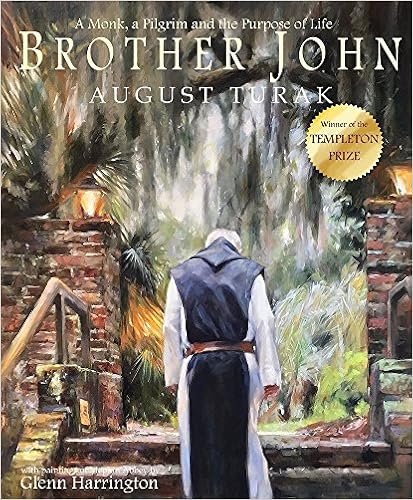
Book Review of Brother John: A journey for meaning

A book as a contemplative spiritual experience. That would be my summary of August Turak's Brother John, a formally published and beautifully illustrated version of an essay for which he was awarded a Templeton Prize.

While many contemplative and meaning-focused texts can be quite philosophical and/or self-help-like, Brother John is an excellent example of spiritual story telling. The fact that it's a true story makes it all the more powerful. Turak's story telling is a perfect example of a spiritual biography that can inspire and encourage.

Turak provides spiritual and philosophical reflection and insights without feeling preachy or heavy-handed. He shares his story. He shares his reflections. He shares his conclusions. He offers them to the reader in case they're helpful. I think most people will find them meaningful.

A big differentiator in the text is the addition of paintings throughout the book from Glenn Harrington. Here's a preview from the trailer:


The paintings helped me slow down and engage the book as a journey. I can easily tend towards scanning texts to gain the basic points of knowledge trying to be conveyed. That's the not the point of this book, at least from my perspective. It's meant for us to reflect. Hearing Turak's personal story gave me a sense of peace after reading and motivated me to personally engage in some slower contemplative activities that I tend to put off for achievement-oriented activities.

Overall, this book felt less like reading a book and more like an experience. It's short, so it can easily be read in a single sitting, easily less than 30 minutes. But the insights will stick around longer. And I believe it's a book with visuals that one could easily come back to repeatedly.

I have to note that I also love that Turak has given the rights and proceeds from the book to the Self Knowledge Symposium Foundation (SKSF), a group he founded with his prize to help build meaning and purpose throughout the West, especially in colleges. Buying the book not only provides the reader with spiritual wisdom, but can also financially support others' journeys as well.

Disclosure of Material Connection: I received this book free from the publisher. I was not required to write a positive review. The opinions I have expressed are my own. I am disclosing this in accordance with the Federal Trade Commission’s 16 CFR, Part 255: “Guides Concerning the Use of Endorsements and Testimonials in Advertising.”

This page contains affiliate links. If you make a purchase through this link, we may receive a portion of the sale at no additional cost to you.

Monday, February 12, 2018

Review: The Spirit of Simplicity

This review first appeared on the Englewood Review of Books.

The Spirit of Simplicity has a compelling backstory: a 70 year old hidden text written by a famed French Cistercian, Jean-Baptiste Chautard, translated with notes by Trappist (a Cistercian branch) monk, Thomas Merton. In a world of complexity and loudness, simplicity for our lives and souls is compelling and increasingly popular.

The text itself is short: 114 pages of content, including 14 illustrations of monasteries, and 23 pages of notes from Merton. It is broken into two parts: The first being the aforementioned translation of Chautard’s The Spirit of Simplicity and the second excerpts from writings and speeches of St. Bernard of Clairvaux, a leader of the Cistercian order, on the topic of interior simplicity, with added commentary by Merton. From a readability standpoint, the reader must remember this text’s place in history: Part 1 was written in 1920s French, translated into 1940s English, both with a target audience of the theologically trained monastic community. Bernard died in 1153. For readers familiar with dense mystical and theological texts, this time will seem familiar and accessible. For those looking for a simplicity self-help book, it will be a grind.

These kind of expectations is where the key focus of satisfaction with the book will be. This book may be most valuable as an insight into the history of the Cistercian order and its accompanying theological values. Its applicability to a lot of modern Christian life is limited, and many will disagree with many of the principles underlying some of the specific applications of simplicity.

A definition of simplicity may be helpful in assessing the book. In his foreword, Merton states, “simplicity may be defined as a constant and unchanging desire for one object and him alone… In the strict sense, simplicity is the perfect conversion of the will to God, asking one thing of God, and desiring that alone, and not going forth and multiplying itself in the world” (p. xviii). This is a laudable definition, albeit ironically complicated to explain simplicity, emphasizing what a difficult concept it is, especially in practice.

Repeatedly through all sections, the writers emphasize that simplicity is intended to bring union with God and the love of God. This may not be intuitive to many people, especially when exploring intellectual simplicity, a section in Part 2. In fact, Merton explicitly states that our intellect is to help us love: “Hence, simplicity in the intellectual order means subordinating all our knowledge to the LOVE OF GOD. We study in order to love” (85). What if we always thought of the principle of study and academia as helping us love?

This quote also reflects the reason for the process of simplicity: Subordination to God. Humility is the term often used to refer to this process, but it does not refer to general humility. Rather, it is humbling (subordinating) ourselves before God. Simplicity helps us to see God as supreme and sufficient, while helping us be obedient to God’s will. This is easier when not distracted by many things of life.

This moves us to what can be considered the limitations of this book: They are focused on a monastic life, which 1) not everyone lives and 2) not everyone agrees is theologically appropriate.

First to 1: This text was written to Cistercian monks. In Part 1, Chautard notes, “It is therefore a matter of obligation for us Cistercians to return often to the study of our ancient Rule, so that we may never forget the fundamental spirit of our reform to which the Church thought it not amiss to grant the title of a true religious order” (p. 12). This seems to provide the intent of his text. The entire focus is reminding his monastic brothers of their proper behaviors, calling them back to the core intent. Merton’s annotations and additions of Bernard’s writings fall into this same focus. If the reader is not a Cistercian monks, the directions will have limited utility, as they are often very behavioral in the context of Cistercian monasticism.

This brand of monasticism advocates for virtually complete withdrawal from society and people gets to point 2 (whether such withdrawal is really intended). To be fair to this spiritual tradition, it is wise to listen to those who promote it to truly understand the goal. The intent is quite holy, seeing to be more like Christ: “The soul of the monk is to reproduce the inner life of his master [Christ] by observing this Rule. That is all” (21). Indeed, all Christians should seek to reproduce the inner life of Christ. The Cistercian model advocates that the best way to do this is through both internally and external simplicity, stripping away as much as is possible. Chautard explains this by stating, “The monk detaches himself from everything that might weigh him down and bind him to the earth. He wants to be simple, not mixed up with the things that are below him” (9). It is hard to argue with this logic in many ways, as life can be distracting. Merton phrases it differently, but again points to separateness from the world as the way to find God: “The whole aim of the Cistercian life—and the fathers of the order are unanimous on this point—is to set men apart from the world that their souls may be purified and led step by step to perfect union with God by the recovery of our lost likeness to him” (71).

Likely all contemplative models and even most general spiritual development perspectives advocate for times of alone. Looking to Christ’s behavior, such as in the Garden of Gethsemane, reinforce this. Indeed, contemplation and slowing facilitates the mystical experiences that the writers are honorably pursuing. However, this monastic approach advocates for this isolation full-time. Many would argue that this is contrary to Christ’s intent, especially when looking at the Great Commission. A balance of the extreme Cistercian version of simplicity with engagement in the world seems a more accurate reflection of Christlikeness.

For readers who want to better understand some spiritual perspectives, especially in the flow of the history of Western Christianity, this is a useful book. If you’re looking for spiritual guidance and inspiration around simplicity, another book in the spiritual formation genre or on contemplation would be more helpful.
Monday, August 18, 2014

Violence Against the Other

The news lately has not been pretty. News in general is rarely happy, as trauma tends to be more sensational and better for headlines than generosity, grace, and love. But it's been extra bad, at least in my perception.

Neighboring countries bombing one another. Children being beheaded because they're of the wrong tribe/religion. Women being stoned because they didn't follow the right religious observance. Police wearing military gear against the communities they were sworn to protect.

What is with the lack of value of human life?

Even in my attempt at downtime, a fictional audiobook I'm listening to is focusing on lynchings in the South in the early 20th century. Why is our history (and present) so focused on killing the Other? Not just ostracizing, shaming, or trying to change the Other (all of which can be bad enough), but flat out destroying them?

I keep coming back to my reflections when I preached last month. The title of my sermon was Identity in Love, and my thought was that it has to do with our identities. When our identities are tied up in tribes, which are focused on sameness, then difference becomes a threat to who we are. Since that sermon, I keep seeing this pattern over and over across cultures and time.

Is there another explanation? If this idea of how we form our identity is at least a piece of the cause of violence against the Other, then how do we promote this kind of identity formation? It's beyond the prosocial behavior building promoted by positive psychology (which I think is wonderful). Identity is deeper than behavior, at least in my view. Spiritual formation seems to start getting in to some of that, as a core idea of spiritual formation is identity, at least spiritually. But most spiritual formation tends to be very individualistic.

It seems what we need is a new corporate identity. We need to change culture. I guess that starts with individuals, but it doesn't seem to be happening quickly enough...

Monday, July 28, 2014

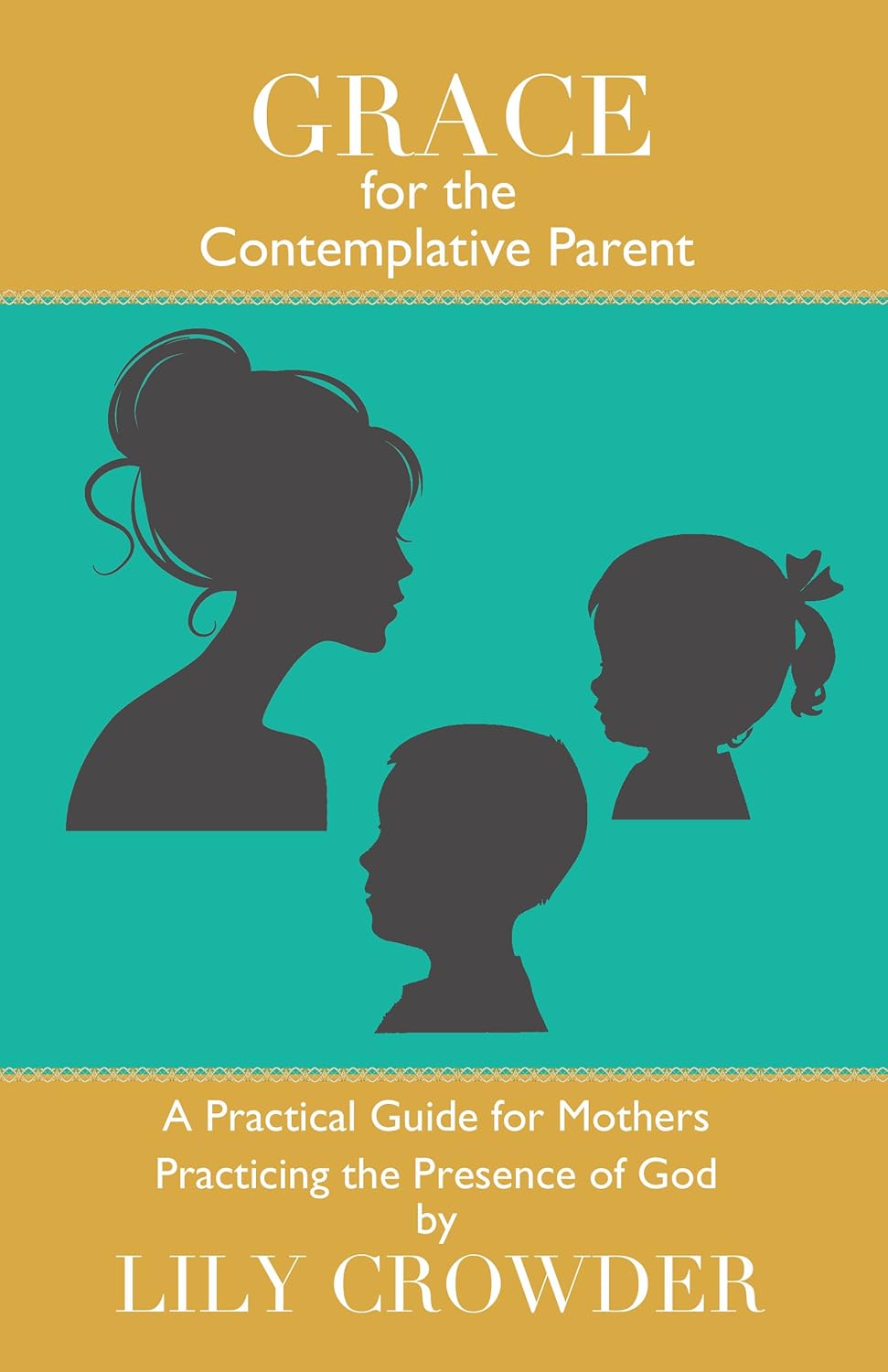
Book Review: Grace for the Contemplative Parent #SpeakeasyContemplativeParents

One of the spiritual formation concepts most dear to my heart is Brother Lawrence's practicing the presence of God. It is core to the Incarnational stream that Richard Foster describes in Streams of Living Water and feels like my spiritual home. For these reasons, Lily Crowder's book, Grace for the Contemplative Parent: A Practical Guide for Mothers Practicing the Presence of God caught my attention.

Crowder does a nice job of applying Brother Lawrence's concepts to the daily life of parenting. She will also probably make many mothers feel quite validated through struggles of the daily grind of life with kids. The points were good and could be powerful, although I didn't feel like there was anything particularly new in what I heard, even though I need to remember to give myself room for grace in many of these same circumstances. Many of the ideas were similar to ones I have conveyed to parents during the course of family therapy, which was validating to me, but not necessarily helpful in my own growth. Since I can still struggle with practicing God's presence, I was hoping this book would give me some new outlook that would translate to transformation. One of my reflections during the book was remembering that insight doesn't necessarily lead to behavior change. Learning something new about ourselves and the world is good and important, but sometimes we need practical skills to actually experience something different.

Even though the main title is "parent," the subtitle is "guide for mothers," and Crowder acknowledges early on that these principles are relevant to all parents, but she is targeting mothers. This is my biggest complaint. During our adoption process, almost all adoption resources were targeted at mothers (you'd be amazed at how many were pink and literally flowery--and my wife doesn't really like either). I felt really left out and invalidated, and I was just as active. Most parenting resources are similarly targeted toward mothers. Thankfully, there is increasing recognition that fathers are often active (and important) in parenting. I don't think it would have been that difficult to make this book more inclusive of fathers, and it would open up another huge audience. And believe me, fathers need grace, as well.

Disclosure of Material Connection: I received this book free from the publisher. I was not required to write a positive review. The opinions I have expressed are my own. I am disclosing this in accordance with the Federal Trade Commission’s 16 CFR, Part 255: “Guides Concerning the Use of Endorsements and Testimonials in Advertising.”

Monday, January 13, 2014

The Importance of Community

Back in 2010, I reviewed the second in James Bryan Smith's Good and Beautiful series. Recently, I had the opportunity to listen to an audiobook version of the third book, The Good and Beautiful Community. Most of my reactions about the process of the book were similar to the prior. Smith is a good, accessible writer, who makes abstract concepts easily understandable.

One of the big differences is that this book did seem to tread some new material in contrast to The Good and Beautiful Life. It still is rather introductory, especially for those who have read a lot in the area of the importance of community. But I have a feeling Smith was on the front edge of this movement, as this book was originally published in 2010.

First, my repeated criticisms are the stronger influence of the contemplative tradition on Smith's form of community building in addition to the reliance on spiritual disciplines. I've written about my view of the limitations of both before, so I won't rehash that. I think both are valuable, especially in community-building, so this isn't truly a bad thing; I would have just liked to see more options from the other of Foster's streams.

One of the elements I most appreciated was Smith's emphasis on the role of community as going through the faith journey together. And being humble. Smith spends an entire chapter exploring how to love those with whom we disagree. This is such an important topic that I often don't find adequately addressed in most discussion of community. I've discussed the topic before on my blog, but it's great to hear balanced efforts toward unity from a national leader. Smith was able to include anecdotes to illustrate his points well (as was helpful throughout the book), and in this section, the story was not just about actually being able to achieve unity. That's one of the things I found most helpful: This book is not about perfection. It's about how to live in an imperfect, fallen community, and how beautiful that is.

Some of Smith's arguments for the need for being in a faith community are a bit weak in my opinion, but he's never heavy-handed or forcing of his opinions. In fact, I experienced his sharing of his perspective as quite grace-filled in recognizing the various ways people approach and experience community. And this method reinforced his view all the more by practicing what he was preaching.

Disclosure of Material Connection: I received this book free from the publisher. I was not required to write a positive review. The opinions I have expressed are my own. I am disclosing this in accordance with the Federal Trade Commission’s 16 CFR, Part 255: “Guides Concerning the Use of Endorsements and Testimonials in Advertising.”

Tuesday, November 27, 2012

A Graceful Creed @ScottStapp @christianaudio @caReviewers

Somehow I made it through high school and college without knowing the band, Creed. I discovered them after finding lead singer, Scott Stapp's solo album during grad school. The music and lyrics were very meaningful to me and helped validate the pain and struggles I felt as my aunt died of cancer. Creed's music was also powerful. I've looked a few times to see if he was releasing another album, to my disappointment.

But then last month, he releases his memoir, Sinner's Creed, and the lack of releases make sense. This incredibly courageous reflection on his life, faith, success, and struggles was quite powerful. I found it particularly relevant and moving from both a psychological and spiritual formation perspective.

I've written before about God image, the psychological concept describing how we view and experience God. Stapp's book is a wonderful example of how experiences in life and relationships with others impact our perspective of and relationship with God. If someone did not believe in the incarnational way God works and how we affect each other's relationships we God, I don't know how they could doubt it after this book.

Stapp's preface is particularly powerful, explaining how obtaining God's love required certain behaviors and work. Things had to be black-and-white clear. So clear that questions were banned. He goes on to say, "And yet the story of my life is profoundly unclear... What remains clear, though, is my passion for the God of love" (p. x). His life and story clearly demonstrate this process.

At the same time, the end of the book seemed a bit strange, going back to a sin-centered narrative rather than a love-centered narrative. While sin is clearly important in the Bible, do we see everything through the lens of sin or through the lens of love? It has some major implications. Stapp seems to move toward the love lens only to almost awkwardly end on the sin lens. I actually wonder if this is in part due to the influence of the 12 step approach in his life in the last few years. While not originally true, in many areas, the 12 steps have taken on a neo-Calvinistic sin-focused condescension. Perhaps this continues to be part of Stapp's journey.

The book is well-written (and narrated, although it would have been wonderful to hear Stapp narrating his own story). It was interesting to me, as a fan, but I'm not sure it would be as attractive to non-Creed or Stapp fans. It's another story of a celebrity's crash and redemption. At the same time, I think in our societal Cult of the Celebrity, it is important to continue to hear these stories to remember that not all is wonderful with fame. In fact, it can destroy life and faith more than anything else. I actually summarized part of Stapp's story in a parent education group a few weeks back when so many parents were more concerned about their kids' grades than their mental health.

One powerful message of this book that we all need to hear is remembering our priorities. This will make all the difference. Despite Stapp's weaknesses, I was quite impressed with how hard he tried to maintain his priorities and keep his son's needs first. In fact, all-in-all, I have so much more respect for Stapp after reading his memoir and am an even bigger fan. I listened to his solo album and the Creed records for at least a week. The meaningful music became all the most meaningful.

Disclosure of Material Connection: I received this book free from the publisher. I was not required to write a positive review. The opinions I have expressed are my own. I am disclosing this in accordance with the Federal Trade Commission’s 16 CFR, Part 255: “Guides Concerning the Use of Endorsements and Testimonials in Advertising.”

Wednesday, December 14, 2011

Monstrous Faith + GIVEAWAY @mattmikalatos @TyndaleHouse

Last year, I reviewed Matt Mikalatos' first book, Imaginary Jesus, which I absolutely loved, particularly from a perspective of the psychological dimensions of faith. He recently released a second book, Night of the Living Dead Christians through Tyndale House Publishers. Here is a great video interview with Matt (who happens to be a Star Trek fan, too, which makes him awesome in my book):


I've been long looking forward to reading this book, but since I've been overworking, my wife has graciously agreed to review it at this time:

The other day as I walked around Barnes and Noble, I was amazed at the sheer amount of "monster mania." It seemed like almost every single book in the fiction section featured vampire after vampire, werewolves, and zombies. There's no doubt about it, monsters are "in." And I'll admit, I do enjoy a good vampire/werewolf novel! But it seems like the genre has been...well, a little overdone.

I was a little skeptical at first that Matt Mikalatos' new book, Night of the Living Dead Christian, would be anything new. I even wondered if it might take the annoying tone of so many other Christian books, denouncing how evil a fascination with creatures might be (a.k.a. "anyone who reads Twilight is on the path to hell!") So I was pleasantly surprised to find out how much FUN this book is! You can tell that the author is a bit of a scifi/movie geek, and I mean that in a good way...there's a definite fondness for all things monster coming through the writing.

Mikalatos takes on the classic movie monsters with a great sense of humor and irreverence, playing up the stereotypes in a unique and clever way and relating them to cliched Christianity (for example, I loved the fact that the zombies were stuffing flyers praising their fearless church leader into doors around town, on a mindless mission to convert brains rather than eat them). It reads like a humorous novel, and never feels "preachy," yet grapples with some big questions and issues about our faith in an insightful way. At one point, when asked about why the werewolf doesn't consider himself a Christian, he replies "If claiming to be a Christian meant personal transformation, the world would be a far different place. As it is, I know far too many Christians who are worse men as Christians than they were as pagans." So true!

I also found interesting the way that Mikalatos inserts himself as the main character, something I have rarely if ever seen done in literature. It seems to break many of the "rules" of writing, and that's part of what makes it so awesome. It doesn't seem to be done in an arrogant way, but rather shows a snarky, self-depricating wit that is a lot of fun to share in.

All in all, this book is an enjoyable ride, and will fit nicely into any monster lover's bookshelf. I'd definitely recommend it to all my fellow "doomed to hell" Christian Twihards. ;)


Laci Morgan


I have a certificate for a free copy of the book to give away here on the blog. In order to enter, leave a comment saying why you would like a copy. You can get additional entries by (1) following me on Twitter, (2) retweeting my Tweet about this post, and (3) subscribing to my blog by email or RSS. Leave a comment on the blog letting me know you did these (if you already follow me on Twitter or subscribe to my blog, that counts). The contest will close on Sunday at midnight. I will need a way to contact you, so either leave your email address, subscribe to the comments feed, or check back here.

Disclosure of Material Connection: I received this book free from the publisher. I was not required to write a positive review. The opinions I have expressed are my own. I am disclosing this in accordance with the Federal Trade Commission’s 16 CFR, Part 255: “Guides Concerning the Use of Endorsements and Testimonials in Advertising.”

Thursday, May 19, 2011

Finding Value, Identity, and Purpose in the Bible @iShineLive @TyndaleHouse @AdamSab

As I've said before, I love collecting Bibles. And over the past year or so, I've really come to love the NLT in particular. The new iShine Bible recently caught my attention for two reasons: It's compact (I've been wanting a small Bible) and it's aimed at tweens (the population I primarily work with in my psychology practice).

The main selling point of the iShine Bible is that it will help kids discover their value, identity, and purpose in Christ. Those of you who know me well know that those are three things that I value highly in spirituality and psychology. I definitely see those at play not only in tweens' lives, but throughout all generations. In fact, the short devotional essays on each concept was meaningful to me personally (I often struggle with those, especially my own inherent value).

These values are a perfect fit with the Bible. However, they were really separated into their own sections. While the content is definitely congruent with the narrative of the Bible, I would have liked to see more devotional elements sprinkled throughout the text. As it stands, the iShine Bible is mostly a nice tract on value, identity, and purpose in a compact Bible. Not bad, just not remarkable.

The media links are a nice engaging touch that takes the Bible out of an isolated book into a world of engagement, which should be the case. There is also a section written in language appropriate for tweens about various questions tweens may have about theology and life. The answers are clear with good Bible references. However, they are often over-simplified. In working with this age group, I can attest to the fact that they can deal with far more intellectual complexity than we often assume.

Interestingly, it took me a while to find out why it's called iShine. At the bottom of the dedication page, there is the little phrase, "Because I am, I shine." I like it. It's simple and to the point. And it was actually quite meaningful to me. Perhaps the shorter devotionals could be useful for this population. It's not too much to get overburdened by, but enough to make one think. If nothing else, I think the iShine Ministries are off to a good start.

Disclosure of Material Connection: I received this book free from the publisher through the Tyndale House book review bloggers program. I was not required to write a positive review. The opinions I have expressed are my own. I am disclosing this in accordance with the Federal Trade Commission’s 16 CFR, Part 255: “Guides Concerning the Use of Endorsements and Testimonials in Advertising.”

Tuesday, May 17, 2011

The Salvation of Sabbath @booksneeze

Back in my first year of undergrad, I spent a couple of weeks intently trying to keep a traditional Sabbath: I would do no homework or studying on a Sunday and spend time in prayer, in nature, and reading non-school-related books (I can't say non-academic--I read those for fun :) ). That didn't last long. I have a lot of trouble not being busy. It's very hard for me to take a break and just have fun (you should see how much paid leave I have accrued at my job).

Now I work for a Seventh Day Adventist institution, and the SDA tradition heavily emphasizes the Sabbath (from Friday sundown to Saturday sundown). Yet the particular sub-organization within which I work minimizes that. I've seen a lot of people talk about Sabbath and live it legalistically, but I do not really see people who live it well in a way that truly benefits their lives and relationship with God.

Over the last few months, I've been slowly going through Dan Allender's Sabbath, part of Phyllis Tickle's The Ancient Practices series. Those who read my blog know I'm not a legalist when it comes to spiritual disciplines or anything spiritual, yet I do love topics of spiritual formation. I tend to engage in ones that are more active. Yet something drew me to this book. I think I knew I needed a Sabbath.

Allender's book starts off in some ways like a traditional book on Sabbath, reminding readers of the biblical mandate to take a Sabbath. However, he continues to explore the richness of Sabbath as something for our joy, pleasure, and fun. He emphasizes that Sabbath "is not merely the cessation of work; it is turning from work to something utterly different from what we normally call rest" (p. 26). In the ensuing chapters, Allender beautifully explores what this means, from explaining "Sabbath as a structure that mediates grace throughout creation" (p. 30) to it being "the most sensual day of the week" (p. 72).

This reframing of Sabbath from the absence of something to the fullness of God is absolutely vital and makes Sabbath not only more desirable, but reasonable. It makes sense why God wants us to engage in a Sabbath.

Yet I have a feeling I had trouble reading this book because this is something that is so hard for me to do. I have spent some moments in the last week engaging in more of Allender's sense of Sabbath. And it has been rewarding. Having a goal of something to work toward, meaning joining with Christ, makes Sabbath so much easier and realistic than just stopping all work.

Allender's quote of Eccelsiastes 4:6, "Better to have one handful with quietness than two handfuls with hard work and chasing the wind," particularly hit me as meaningful and poignant. I think that may be my new motto verse as a reminder and a lesson. But that doesn't mean Sabbath is not useful and productive. It's just productive in an eternal sense. As Allender states:
The Sabbath is our play day--not as a break from the routine of work, but as a feast that celebrates the superabundance of God's creative love to give glory for no other reason other than Love himself loves to create and give away glory. (p. 82)
Disclosure of Material Connection: I received this book free from the publisher through the BookSneeze®.com book review bloggers program. I was not required to write a positive review. The opinions I have expressed are my own. I am disclosing this in accordance with the Federal Trade Commission’s 16 CFR, Part 255: “Guides Concerning the Use of Endorsements and Testimonials in Advertising.”

Thursday, January 20, 2011

Growing Out of Churches

Last Friday, I wrote a post on the need to look at people's spiritual progress developmentally. A while ago, my friend, Cal, published a post on how some churches are good at "matching" people with Jesus (i.e. conversion), but not so good with the follow-up spiritual formation.

I was thinking of another analogy of these ideas recently that in some ways combines them. American schooling is broken into primary (elementary) and secondary (high) school (not sure where junior high fits in). Then there's "higher" education. Elementary schools meet the needs of little ones, as does high schools for the teends.

No one would expect a 14-year-old to attend an elementary school unless there were significant developmental delays or he or she missed a lot of school. Even then, the student would likely have a specialized plan in the high school.

Similarly, an 8-year-old would be significantly out of a place at a high school or college (unless he was Doogie Howser). Even an intellectually bright 8-year-old is not emotionally as mature as a 16-year-old (all sarcasm aside). At my work, we address very similar issues with kids of all ages. Yet we separate them based on age because they do not process the same way.

Why would spiritual development be any different?

Could it be that some church institutions are meant to be elementary schools (or even pre-schools) to introduce students of God to the basics? As they grow, maybe they are supposed to grow out of one church, into another. The latter church focuses less on conversion and more on theological development. Still another emphasizes spiritual formation.

All of these elements are important. And I don't know what order they might go in (I, of course, have my biases, but they are just that--biases).

Of course, we need mature Christians in the elementary churches to teach the little ones (just as our teachers should be mature). An elementary school teacher is no less qualified and amazing and mature and smart as a high school teacher. Or even a college professor. Believe me, I know many in each category! :) They are all called to different contexts.

Yet we often assume one church will, can, and should all developmental levels of Christians. One could look at the apostolic church, which probably ran that way. We also have to remember that they were pretty much all baby Christians, though. It was also a fledgling institution, like the one-room schoolhouse. And there is also 1 Corinthians 3:1-2, in which Paul talks about speaking to different developmental levels of Christians in different manners.

Perhaps modern churches can manage multiple levels of development. That would be awesome. I'm not sure many really do that. Maybe we need to be open to the idea of "moving up" from one church to another. Not that that truly says anything negative or positive about one versus the other. They're all vital.

I just wonder if churches focused more on a particular developmental level of Christian and were willing eager to "graduate" Christians, helping them move on when necessary, would we see more spiritual growth in the overall body of Christ?

And just as people graduate out of school and no longer pursue formal education, is there a point at which formal spiritual education is no longer needed?

Friday, January 14, 2011

Toward Proximal Development in Spirituality

As a child psychologist, it is important to understand what is appropriate for someone to do developmentally. And what is appropriate to encourage them to do. This doesn't end in adulthood. There are plenty of theories that explore developmental levels throughout adulthood. And therapists are encouraged to challenge people in their zones of proximal development (helping them grow into the next level, but not too many levels ahead).

I think the same is true of spirituality. While psychological development, particularly early on, corresponds closely to chronological age, spiritual development may not. There is definitely a correlation, but I have (anecdotally) found there is a wider range of developmental levels spiritually across age groups.

A very solid developmental model is Hagberg and Guelich's stages of faith, which I think does describe a lot of spiritual development. The idea of proximal development is critical in this model of stages of faith, as Hagberg and Guelich state that a person can somewhat comprehend the level immediate ahead of their current one, but not the further stages.

Therefore, if we try to push someone's spiritual development too far too fast, it simply won't work.

I also wonder if what many of us who push for various changes in the way church is done and theology is approached are doing a disservice to newer Christians. Frankly, most people who focus on these changes are not as focused on conversion, but rather existing Christians' spiritual development.

Perhaps the more rigid, information-driven, behavioral methods of spirituality are not only useful for some Christians, but necessary to lay a foundation. In many ways, this is what God did with the nation of Israel, creating a set of rather legalistic laws to create a foundation, later explaining that the law does not save anyone. As Paul stated in Romans 5:20-21, the law was given so that grace is more beautiful.

Just as little children need to know rigid rules about talking to strangers for their safety to later find there is appropriate ambiguity, perhaps rigid rules are appropriate for those who are young spiritually (even if they have been Christians for decades).

My appreciation of a devotional reading of Scripture is due to my prior reading for information. My love for transformation is accentuated because I have lived a life focused on sin reduction.

Remember the context of people's comments and their audience is important for me to remember. However, when a church only focuses on the more foundational elements, what happens when people are ready to move forward? How does one engage in zones of proximal development for a group of people with very different zones?

Friday, December 17, 2010

Interview with @LifeDiscipler Creator, Tony Guard

On Sunday, I reviewed the innovative LifeDiscipler, which uses technology to remind us of God's constant presence. Today, here (below the video) is an interview with its creator, Tony Guard, about the product, its development process, and how he hopes it will help people.


What inspired you to develop LifeDiscipler?
I have been in product development for close to 20 years, primarily developing products for other people, and inventing products for sale or license. During that time, I always wanted to develop a faith based product to glorify the Lord and share my faith. It took a lot of blessing from the Lord financially for me to have the resources to take on such a venture. And many more blessings beyond that with time, people, resources... etc. But if I went down that road, this may become a small book.

As I approached the idea of developing a product, I soon realized God had been revealing a direction for me throughout the previous years. This direction was focused on seeing the lack of discipling that was and is happening in our churches today. I was seeing too many Christians who were “new believers” without support, believers who were not growing, and young people who were falling away at record numbers. And ultimately, the responsibility comes back to… “what am I doing to grow the Kingdom.”

Through a lot of seeking and even more prayer, God revealed to me that instead of trying to figure out how to encourage someone else to move closer to Him I needed to focus on figuring out what was holding “me” back from growing closer to Him. That one revelation transformed my approach to developing this product and allowed me to get to the place where God revealed the LifeDiscipler to me (Mat 7:7). I realized despite my devotion and prayers in the morning, prayers at night, and church every Sunday… I forgot about Him during the day. And on top of that, not only was I forgetting about God during a time when many important decisions were being made, I was also away from every Godly resource, safety net, and option for accountability. Then it hit me… what if God could "tap me on the shoulder" throughout the day to keep me focused on Him… and better yet, help me get through the tough issues of life with personal guidance on my personal need, anywhere anytime.

Can you explain the idea behind the name?
The name LifeDiscipler grew out of the word disciple (to teach or train) and the word life, representing all that we deal with in this life. The word disciple is almost always associated with a religious context and especially with Christ's 12 disciples. This association is exactly what I wanted since the product was developed specifically for Christians and was created as a first step to needed discipleship for our body of believers. The two words together represent that God's word is the answer for understanding how to deal with the issues of this life... in this world.

What is your view of discipleship, and how does the LifeDiscipler help toward that?
Discipleship, from a Christian "body" perspective, is spiritual training that takes place from one believer to another... some may refer to this as mentoring. From my humble opinion, this is not taking place as much as it should in our current "Christian body" (that’s not to say there are not some great discipleship material and programs – there are – they just aren’t being put into practice enough). Because of this, many spiritually young believers are either left to fend for themselves for growth, become stagnate, or worst of all fall away. The LifeDiscipler is a tool that promotes a step in the direction of growth when there is not a mature believer available to disciple/mentor. My hope and prayer is that when a Christian can honestly experience how easily they can apply God's word to all aspects of their life, and how it can impact their life in amazing visible ways... they will want to go deeper in the Bible and deeper in training. The LifeDiscipler was designed to be a “step” forward in growing closer to God and to understanding His word better… never a replacement for the Bible or believer to believer discipleship.

Your FAQs say only Christians should use the LifeDiscipler because non-Christians won't understand the meaning and application of the verses. Can you say more about that?
God's word is infallible and without question. A non-believer without that spiritual base and compass will not have the ability to interpret the meaning of scripture. True understanding comes from the Holy Spirit (John 14:26), and if the non-believer can’t understand the verses or doesn’t think it’s unquestionable, how can they apply it to their life and believe it. The Holy Spirit must have residence in the heart for true understanding.

Do you think this could still be a way to introduce non-Christians to the Word of God?
Yes. The Holy Spirit is always at work and we need to be prepared at any time to give an answer and to share the love of Christ (2Tim 4:2). Although, we don’t “suggest” the LifeDiscipler for a non-believer, I would always tell you to follow God’s direction wherever He is leading. God’s word and the Holy Spirit work in a way all their own and without any help from the LifeDiscipler, anyone or anything.

This question also takes us to another point… spreading the gospel of Jesus Christ. This is one of many things, as believers, we all have in common… we are all called to share the Good News (Acts 1:8). Within the LifeDiscipler is a life-subject called “TELLING OTHERS.” This subject includes verses that give the foundational verses to understand the option of salvation through Jesus Christ. With the LifeDiscipler in hand, you don’t have to wonder what to say or what verse you should mention… but that also means there are no more excuses.

Please talk about the process of developing the 44 subjects and choosing the 1500 verses. Did you do it alone? How long did it take? How did you decide which translation to use?
In the process of developing a product that deals with Gods word, the most important focus is to honor God and to be in line with His divinely inspired word. The accountability from God placed on anyone representing Him or His word is very high. In developing the LifeDiscipler special and intensive care was taken to make sure of contextual accuracy.  

There was a lot of time (over 6 months) and many resources that ultimately helped define each verse and the subject(s) in which the verse would be categorized. Beyond the resources, five degreed, ordained pastors reviewed every verse to confirm the context and accuracy. This process actually reduced the amount of verses that we were able to include. I have been asked many times, “why don’t you include the entire Bible?”. And my answer is a fairly basic one... Our goal is to provide a quick 1-2 verse insight (quickly read on a small screen) that would express God’s character and guidance within a particular circumstance or situation and still remain in context of the original intent.

What about translations for the LifeDiscipler… Since we are a new Christian company with our first product on the market, we have to make decisions that will benefit the “general” Christian market until a time (Lord willing) when we are established and can develop the more niche products with specific translations. With this in mind, and the understanding that there are many great current translations available, we decided to provide a combination rather than be exclusive to a translation. This also allowed us to get into the market easier and faster.

You say that some of your proceeds go to charities. Can you talk about which ones you chose to support? Why did you decide to give some money to charities rather than just lower the cost of the unit?
The primary goal of LifeDiscipler is to encourage Christians to a closer relationship with God. Our second purpose is to assist other Christian non-profit organizations to continue their ministry and continue serving in His name. This is the first year of our existence in the marketplace and our donations take place at the end of the year. Our first donation will happen the week of December 27, 2010. Our continued focus will be on charities that deal with children and spreading the Gospel. The charities we have selected this year will be Compassion International and Worldvision. We are hoping for this aspect of our business to become a huge blessing to the charities as we grow.

The donation to charities has no bearing on the price of the product. This is simply a corporate decision to continue to honor God (Acts 20:35). This product means much more to us than making money. In fact, it will be a long time before the corporation makes a profit. Don’t get me wrong, we can’t stay in business if we don’t make enough money to continue producing products… again though… it’s not our purpose.

What is your favorite feedback/testimony?
Honestly, the most recent one… Every time I hear how God has revealed Himself to someone in a way that was just what they needed and in a way that changed them spiritually… and in a way only He could do, I am on fire again. So my favorite is the one I am about to hear. I will let you know (we do post some testimonies on our website).

Is there a particular demographic that the LifeDiscipler seems to be popular with or is targeted at?
This is a great question, and one I thought would play itself out as we continued selling. However, what we have found is that it hits almost every generation and demographic for different reasons. The reasons vary and could be discussed in great detail that would probably bore you. In a quick overview, some of the reasons are as follows: as a way to get to know what it means to be a Christian (new believer); as a reference and study tool (new to mature Christian – we even have some pastors using it for quick reference); as a tool to encourage other Christians (great as a gift for any occasion or a gift of comfort); a tool to spread God's word and raise money for a church, school, or charity (Christian organizations/ outreach/ youth groups/ ministries)… as a way to share God daily with the family (some stay-at-home moms are leaving them out on their kitchen counters so everyone has access – and even using it as a teaching resource with their children). As you can see there are many ways the LifeDiscipler reaches into virtually all age groups of Christians.

There is a group that has really stood out during this process and has attached itself to the purpose of the LifeDiscipler… that is the Stay at Home Mom. So often Stay at Home Moms are in need of continual support and assurance from the pressures and pace of their responsibilities. What I have found is that the touch of God’s word throughout the day, specific to their need that day, has become an incredible resource of spiritual encouragement. I receive testimonials from all different age groups but none with the passion and thankfulness as the Stay at Home Moms. Blessings to them for all they do to raise our children in the admonition of the Lord.

Can you talk a bit about the manufacturing process and decisions? Some people, including me, have noted some features that would be nice, but are absent (like vibration alert and backlit screen).
Sure. Throughout the process of developing the LifeDiscipler, we kept certain parameters central to our process; 1) We needed to make the LifeDiscipler in a price range that would allow any Christian the possibility of purchasing it, 2) it should be easy to use and intuitive enough for any person to be able to use, 3) It needed to be an elegant product that would be honoring to God in look and quality. With these parameters set… they drove all of the decisions surrounding features and materials.

I can give you some specific examples;
1) Why the simplified (some say out-dated) LCD screen?
Although we get a few poor reviews on our LCD screen, our intent and purpose remains in tact. When looking into screen types, cost and power consumption needed, the LCD screen stood out as the right choice hands down. If we were to move to an illuminated screen (like that of many cell phones), our retail price would have jumped $20 because of the screen cost and more importantly the larger power supply needed, making the final cost $50.

2) Why the materials?
As previously mentioned, we wanted to make the best God honoring product we could make. Therefore, we used a high density ABS plastic for it’s extreme durability… the lens cover for the screen is made of Polycarbonate (one of the clearest most scratch resistant durable plastics available). We selected the best materials possible for each aspect of the product. Even the protective stretch-on covers are made from “Super Silicone™” for its durability and wear.

3) What about vibration for an alarm?
We agree this would be a nice feature, and we wanted it as part of the first features for the LifeDiscipler. Again, we had to go back to our first priority of keeping our price as low as possible. Any process within an electronic that requires focused action like vibration, sound, and illumination requires a lot of power… and power means money.

The LifeDiscipler is a simple product with a simple purpose… growth. No fancy functions or features, just allowing God’s word to have access to you to deepen your relationship with Him… when you typically don’t have it.

Wednesday, December 15, 2010

The Pursuit of Holiness is Pharasaical Self-Righteous Perfectionism @christianaudio @caReviewers

I recently received a complimentary copy of Jerry Bridges' audiobook version of The Pursuit of Holiness in order to review it (without any expectation of a positive review, as will be obvious here :) ). I had several theological problems with this book that bleed over to the larger issues of some of holiness movements. Let's go through these by way of some of Bridges' central points:


Factual certainty is central to faith. This, I think, is one of the most damaging elements of this book. At the same time, it was one of the most helpful to me, as it elucidated why so many people are obsessed with sin and the purging of sin: It helps certainty of salvation (more on this later).


Bridges states, "Faith must always be based in fact." I'm not sure where he gets this idea, as it's not biblical or humanly defined. Hebrews 10:1 defines faith as being certain, but based on what we hope for and cannot see. As emphasized by the positivist and empiricist movements, fact is really based on what can be observed by humans. That does not meant there is no fact of God. It means that there does not have to be proof in order to have faith. In fact, faith is more powerful without fact.


Secular definitions also define faith as not being based in fact. Wikipedia's first sentence in the article on faith states, "Faith is the confident belief or trust in a person, idea, or thing that is not based on proof." Other definitions of faith have more to do with the general idea of belief or trust, not necessarily rooted in fact.


This blog is devoted to people's struggles with faith, usually based on their reliance on facts that end up being unsupportable or not as they originally thought. Just because the facts disappear does not mean God or our faith have to disappear.


Reason must contain and control desire. Bridges rightly explains that our desires can be impure and lead us down some terrible roads. Therefore, he argues that we must always use our reason to contain our sinful desires. Reason is a very good thing, but it can also lead us astray. As a psychologist, I frequently see the reason-based defense of rationalization used to dissociate someone from their emotions and therefore move them away from truth.


Ransomed Heart Ministries is based on the premise that once we give our lives to Christ, he gives us a new, good heart. Heck, even the more conservative and sinlessness-driven John Piper's ministry is called Desiring God. We must listen to our desires. Yes, they may mislead us, but if we pay good attention to them, we will hear God speaking to us. Frankly, God speaks to us more through our emotions than through our intellect.


Holy is defined by sinlessness. Bridges states that holiness is "separation from impurity and moral evil." This is one of the biggest and most dangerous bad definitions in Christianity. A few months ago, I talked about how holy and sinlessness are not one in the same. Holiness can include sinlessness, but it is not defined by it. Rather, a better definition of holy is sacred, meaning set apart. Avoiding sin is one way to be set apart, but holiness is a lot more than that.


Granted, Bridges later says that holiness is in a broader sense "obedience to the will of God in whatever God directs," but by the content of his book, he clearly focuses on God's will being that we lead sinless lives.


One of the reasons this perspective can be dangerous is that it can lead us to assume that God dislikes us. Jonathan Brinks recently posted an article related to a video by Skye Jethani, exploring how God views us in the midst of sin. The answer: God loves us. When we forget that, our relationship with God becomes strained because we no longer trust him. But usually that's not our fault, but rather the fault of the Church. 


Sinlessness is the evidence of salvation. Bridges states partway through his book, "The only evidence of salvation we have is a holy life." Based on his definition of holy, this would mean sinless. Besides the fact that no person will ever be sinless on earth (Bridges notes this), this idea is simply not biblical. He argues that the Holy Spirit helps us become sinless.


Yet in Galatians 5:22-23, Paul states the fruit of the spirit is "love, joy, peace, patience, kindness, goodness, faithfulness, gentleness, and self-control." Do these correlate with sinlessness? Some do. But these indicate something much more than the absence of sin. They emphasize the presence of love. Frankly, most of these emphasize desire and emotion and not reason, contrary to Bridges earlier point about reason trumping emotion.

Finally, this brings us back to the idea of the role and motivation of factual certainty. It seems this whole book (and I would argue much of people's obsessions with sin) is focused on the need to be confident in their own salvation. This is definitely an understandable concern: We don't want to wonder if we'll be in Heaven. We want proof. So we look for it in various ways.

One of the ways is emphasizing a "pure," sinless life. Like the Pharisees, we can become self-righteous if we lead sinless lives, being certain of our salvation. But just like the Pharisees, it is at this time that we are the farthest from God, missing the true hope of salvation in a relationship with Christ.

Sunday, December 12, 2010

Technological Contemplation & Presence @LifeDiscipler @FCStores

Since I read Present Perfect a few months ago, I've been looking for some way to remind myself to remain present intermittently throughout the day. In that book, Boyd talks about how he gives himself reminders to stay present and attentive to God. Staying present is something that is very difficult for me, as I can become easily distracted. I searched for some applications for my Android phone, but nothing quite worked.


Then a short time ago, in a Family Christian Stores brochure, I saw a listing for the LifeDiscipler. It is a little gadget that feeds you a Bible verse every 15, 30, or 60 minutes (of your choice). At the selected interval (and you can turn the device off completely), it beeps at a soft or loud volume (or you can silence the alert) to let you know you can read another verse.


In many ways, this is exactly what I was looking for, so I purchased one from a Family Christian Store. I currently have it set to 30 minutes, which feels generally perfect to help me remain mindful of and stay in God's presence. I would really love if it could have a vibrate setting. Working in a mental health setting where all devices have to be silenced, I simply have to leave the LifeDiscipler in my office. While I wouldn't be able to read the verse during a therapy session, just the vibration would help me remember to be present. Additionally, even the loud setting can be too quiet at times (I missed it going off doing some Christmas shopping). The vibration option could help prevent this.


They are developing iPhone and Android application versions of LifeDiscipler, so we may see the vibration feature there....


The other really neat benefit is that the 1500 verses from 5 translations (NIV, TNIV, NKJV, NLT, CEV) are broken up into 44 categories, so you can choose what theme you want to receive verses from. This helps meet individual and immediate needs more effectively.


The LifeDiscipler goes for $30 on the LifeDiscipler website, although they are advertising a 20% coupon code (CHRIST20) through December 17. They are offering a 30% off coupon code (LIFE30) via the Facebook page. Family Christian Stores had it for $25 when I purchased it, although it's on sale for $20 right now. Ultimately, this seems overpriced. The basic technology is simple, and the plastic does not seem like the highest-quality. However, it does not feel like it would break in the time I've used it. It seems more like a sub-$10 product, especially compared with various youth games with more detailed screens and controls. At the same time, the price seemed worth it to me for the benefit I got (although I almost didn't purchase one because of the price).


[I provided the creator of the LifeDiscipler with a preview of the review, and he provided this clarification of the product manufacturing process and resulting cost:
The LifeDiscipler is actually made with high density ABS (very tough plastic - more expensive as well) and the lens is protected by a polycarbonate lens (best clarity and most durable)... we selected the best plastic possible (the weight of the product is light and oftens gives the impression of a lesser quality part - so it's understood why you said that). And the price is a direct correlation to our cost and the volume we produce. Since we are a brand new company with one product, our product costs are much higher than a company that produces 50k units. Many of the games you mentioned started out at double their current retail price (like 20Q for example).
The LifeDiscipler is a way that emphasizes how technology can truly help us become more contemplative and practice the presence of God.

However, the name implies we can become a disciple simply by reading Bible verses occasionally. As I discuss on this blog, that's obviously not true. The packaging and website also advertise how it can provide life answers as we need them. I think that's an overstatement, especially as the verses are not read within the larger narrative. However, they are chosen well to be able to stand on their own as much as possible.

Nevertheless, I think the name is clever and fine. It's good marketing. And as long as we don't over-rely on any one tool, the LifeDiscipler can help us become better disciples by reminding us of God's promises, God's presence, and God's word. I will continue to use it on a daily basis.

Saturday, December 11, 2010

Prayer Books Summarized

This week, I have reviewed seven rather different prayer books. If you missed any of them or would like a summary with links, here you are!

Celtic Devotions: Based in the Celtic Christian tradition with short morning and evening prayers and devotions. Portable and useful for individual use. Could be used in a group.

A Pastor Prays for His People: Developed and transcribed from a pastor's prayers over the years for his congregation during weekly church services. Has an index of themes. Probably more useful in a group setting. Good portability.

Prayers: A Personal Selection: A short audiobook of prayers from the Bible and from Church history set to music. Particularly good for individual meditation time.

Common Prayer: A Liturgy for Ordinary Radicals: Thick and dense book rooted in the long history of liturgy from several Christian traditions, making it quite comprehensive. Included is a songbook, making it quite unique. Focused primarily on a contemplative tradition. Not as portable as some. Could be used individually, but more useful in a group.

Light for the Journey: Morning and Evening Prayers: Written with a goal of becoming more active participants in our lives and with God to renew the world. I received a PDF version, so I cannot comment on portability, but it is like mobile. Could be used in both an individual or group setting.

Eucharistic Prayer for Inclusive Communities (Vol. 1 & 2): Coming from a feminist Catholic perspective, the editors bring together "high church" liturgy from worldwide authors for use in group while celebrating the Eucharist. A unique element is using gender inclusive (and often female) language around God. It comes in a spiral bound version that lays flat for easy use. I received a PDF version, so it is difficult to know the dimensions, but they appear to be 8.5x11.

BodyPrayer: Focused on a more Incarnational tradition, emphasizing the role of our bodies in prayer, reminding the reader that the body is important to holistic spirituality and prayer. Very mobile and can be used individually and in a group.

Friday, December 10, 2010

BodyPrayer @pagitt @randomhouse

This post is part of my series on prayer books. This was one book in the series I purchased and did not receive a complimentary review copy.

BodyPrayer was one of the first books I purchased by Doug Pagitt, and I love it. He is currently posting excerpts from the book on his blog, so that's a great way to get a free introduction to the book. He is also offering a special discount on several of his books, including BodyPrayer.

This small hardcover book is also written by Kathryn Prill and illustrated by Colleen Shealer Olson (when one of the authors is well-known, others get overlooked, so I don't want to overlook them! :) ). The size makes it very user-friendly, as it is quite mobile. One of the practical difficulties is that with it being a hardcover, it doesn't always stay open on its own. So if you're trying to do a prayer posture while reading, it can be a challenge! :)

As indicated by the title, a major focus of this prayer book is not as much on contemplative prayers or meditations (although short ones are included in it), but rather including our bodies in our prayers. As the authors state, so often we forget about our bodies when engaging in prayer and with our spiritualities. As I often discuss on this blog, an Incarnational approach, recognizing the humanity of our spirituality, is very important. This is one of the few prayer books that is centrally Incarnational, which I appreciate.

The authors note that including the body in prayer actually has a long history in Christianity, although we often forget about it in Western Christianity. They offer several suggested prayer postures for various themes and events. One of the things I particularly appreciate is that they explicitly state in the introduction that these are not meant to be formulaic or perfect solutions to prayer. Rather, they are suggestions, essentially prompts for us to engage in prayer in deeper, more holistic ways. I think just approaching prayer slightly differently like this can be particularly powerful.

This book has helped me remember to pay attention to my body during times of prayer and make sure that I posture myself in a way that is most meaningful during that particular prayer. I also used it a couple of years ago during a spiritual formation presentation at my church to help people engage more holistically. There was some initial awkwardness, but people generally had a positive reaction to it. So this book can definitely be used both individually and in a group.

Thursday, December 9, 2010

Eucharistic Prayer for Inclusive Communities @sofiabmm

This post is part of my series on prayer books. I received a complimentary review copy of this book without a requirement or expectation of a positive review.

Eucharistic Prayer for Inclusive Communities comes in two volumes, Themes and Special Occasions and Possibilities for the Liturgical Year. The volume titles are rather good definitions of the respective books. Volume 1 can be used year-round for various life cycle events, while the second volume is organized aroudn the traditional liturgical year. They were edited by Sheila Durkin Dierks and Bridget Mary Meehan, while the prayers were compiled from a variety of men and women worldwide.


The central focus of the volumes is time to gather to enjoy, celebrate, and experience the Eucharist (also known as Communion). Therefore, they are intended to be used in a group, communal setting rather than for individual devotion.


Besides the focus of the prayers on the Eucharist and community, these books particularly emphasize inclusion--communities that are not defined by walls and in- and out-groups. Meehan, in particular, has been advocating for female clergy in the Roman Catholic Church, so there is a strong feminist theme that runs through the books.


Ultimately, these prayer books are particularly aimed at more liturgical congregants of Catholic, Episcopalian, or Anglican traditions who emphasize inclusion in their communities. As the authors noted in the introduction of volume 1, many of the traditional Eucharistic prayers have been lost over time and create a feeling of exclusion for certain groups. The authors seem to want to help people feel welcomed to worship and connect with God, which is a noble and difficult task.


One way they attempt to be more welcoming is by intentionally using more inclusive language (those who have followed the debates over the TNIV know how controversial this can be in some circles). This inclusive language even moves to language about God. Specifically, the authors state:
A couple of thoughts: we encourage variations in naming toward God. The world is full of amazing possibilities, and as you give yourself permission to stretch in words of Eucharistic prayer, you will also find new ways of calling out to God in all the her/his/its wonderful abundance. (Vol. 1, p. xii)
Gender ambiguity related to God can definitely be controversial, but as most theologians would agree God is without gender, it should be less controversial than many make it out to be, in my opinion. Even if one is comfortable using male gendered language with God, changing our language temporarily can help us remember why we use the words we use.


The websites for each book also include a sample liturgy from the books. These definitely represent the "high church," strong liturgical traditions, so checking a sample could be good if you are unsure if you are a fan of liturgy. If you are a "low church" Protestant who is new to and exploring the liturgical traditions, other prayer books, like Common Prayer: A Liturgy for Ordinary Radicals, may be a better start, as it provides more instruction and guidance. However, for those who love liturgy, this is an excellent resource.


The prayers are strong and definitely represent inclusive language. Those who are open to different approaches to language about God could benefit from these prayers in stepping back from routine ways of talking about God in order to remember the meaning in our language.


Unless the reader is a feminist or a strong advocate of explicit inclusive language, this may not be a resource for regular use. I definitely want to see more inclusion in communities and am an egalitarian rather than a complementarian, but the text was still representative of a perspective that is more "liberal" than my own and would probably not be one I would use. Again, though, it is still useful as a way to reflect on my own position and beliefs, and I can definitely see how this can be a very valuable prayer book for many people.


I received PDF versions of the books, but I was told they come in spiral-bound versions, which are made so they easily lay flat during times of prayer and celebration, making them sound quite user-friendly.

Questions?

Got a question, struggle, or doubt you'd like to see addressed here? Contact me, and I'll try to discuss it (and may even help you get an answer).