Showing posts with label Review. Show all posts

Sunday, December 16, 2018

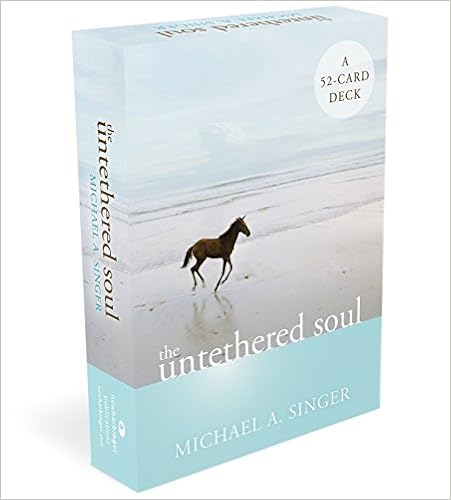
A Card Deck for Centeredness (Product Review)

Mindfulness, strengths-based work, contemplation, and similar wellness-oriented activities, especially with overlap in psychology, are major areas of interest for me. I also tend to be drawn to prayer card decks.

The Untethered Soul card deck from Michael A. Singer, based on his book of the same name, caught my attention as perhaps a more secular version of this interest. These 52 cards have short phrases to inspire and help center readers.

First off, the box and cards are very well made and beautiful in their own right. It doesn't feel like a cheap paper or cardboard container or deck set. It's something that looks nice on a desk, which is exactly how I use this one. I put the lid on the base at a 90 degree angle, providing a background and display a different card each week.

The image backgrounds have a good nature basis that can be used for contemplation and almost automatically provides some relaxation. The phrases, grouped into themes, can be encouragements, inspiration, or even questions encouraging reflection. One could easily just read through all the cards and move on with life, but that would miss the point. Sitting with them for contemplation and centering work is where they're useful.

As I suspected, they do have a more secular feel in many cases. However, some cards draw from various religious traditions, albeit lightly. If someone wants encouragement from a single tradition, you'll probably want to pass on this set. However, if you're open to considering wisdom from around the world, the phrases and considerations can be a useful foundation for contemplation and meditation.

The deck's trailer provides a bit more context:


This video makes the deck seem quite new age-y/self-help-like, and it can have that feel (positively or negatively, depending on your perspective). However, I have to say I think the promises in the video are more than a bit over-stated. No card deck or phrase will be truly transformative on its own. If you view the deck as an opportunity to remind yourself to be present and reflect, then it can be useful. But the sayings aren't necessarily any more inspirational or transformative than other decks. In fact, the lack of a firm spiritual tradition or psychological rootedness may make the deck and phrases appear to have less depth or "thickness."

In any case, this can be a nice gift for a loved one or even yourself. The benefit of it not being overtly spiritual is it can be used as a gift in many contexts.

Disclosure of Material Connection: I received this card deck free from the publisher. I was not required to write a positive review. The opinions I have expressed are my own. I am disclosing this in accordance with the Federal Trade Commission’s 16 CFR, Part 255: “Guides Concerning the Use of Endorsements and Testimonials in Advertising.”
This page contains affiliate links. If you make a purchase through this link, we may receive a portion of the sale at no additional cost to you.

Saturday, December 15, 2018

12 Practical Celtic Spiritual Activities (Book Review)

The Celtic traditions have long held deep meaning for me. There's something about the Incarnational and holistic approach that makes it theologically and practically impactful and relevant in my mind. I have been a reader of Christine Valters Paintner's devotionals and work for a few years now, and love her spirit and wisdom.

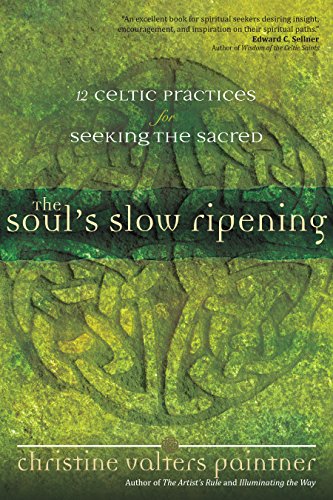
All of this made me interested in her newly released book, The Soul's Slow Ripening: 12 Celtic Practices for Seeking the Sacred. What is unique about Paintner's approach is that she provides a personal spiritual story, some historical background, biblical reflections, and concrete spiritual formation-type activities, including lectio divina and even photography, to help bring these practices home.

I also appreciate that her husband, John, regularly contributes to the reflections and applications of the practices. Another voice and perspective, albeit aligned nicely, bring additional context and wisdom to the text.

Paintner explicitly states that this book can be read from front to back, but also can be digested in any order desired. It really is that flexible, allowing the reader to dive into whatever practice is most relevant at a given moment. The subheadings and different aspects presented to each practice not only make them more concrete and readily applicable, but also provide easy moments to pause in readings and pick back up.

This isn't necessarily a book that one would read once through for lessons, although it could be used that way. Rather, it could be more of a reference tool, being picked up at different phases of life for wisdom and spiritual suggestions. There's enough variety and diversity that I can see it being useful in many contexts and phases of life.

It has enough philosophy and theology that it can have meaningful depth for those desiring traditional substance. It also has excellent practicality that it doesn't feel too "spiritual," abstract, or philosophical. The Paintners both come across as very practical to me, striking an excellent balance between Heaven and Earth.

If you're interested in Celtic traditions, this is an excellent addition, either for early explorers or even those seasoned in Celtic Christianity and spiritual formation.

Disclosure of Material Connection: I received this book free from the publisher. I was not required to write a positive review. The opinions I have expressed are my own. I am disclosing this in accordance with the Federal Trade Commission’s 16 CFR, Part 255: “Guides Concerning the Use of Endorsements and Testimonials in Advertising.”

This page contains affiliate links. If you make a purchase through this link, we may receive a portion of the sale at no additional cost to you.

Friday, December 14, 2018

Book Review of Brother John: A journey for meaning

A book as a contemplative spiritual experience. That would be my summary of August Turak's Brother John, a formally published and beautifully illustrated version of an essay for which he was awarded a Templeton Prize.

While many contemplative and meaning-focused texts can be quite philosophical and/or self-help-like, Brother John is an excellent example of spiritual story telling. The fact that it's a true story makes it all the more powerful. Turak's story telling is a perfect example of a spiritual biography that can inspire and encourage.

Turak provides spiritual and philosophical reflection and insights without feeling preachy or heavy-handed. He shares his story. He shares his reflections. He shares his conclusions. He offers them to the reader in case they're helpful. I think most people will find them meaningful.

A big differentiator in the text is the addition of paintings throughout the book from Glenn Harrington. Here's a preview from the trailer:


The paintings helped me slow down and engage the book as a journey. I can easily tend towards scanning texts to gain the basic points of knowledge trying to be conveyed. That's the not the point of this book, at least from my perspective. It's meant for us to reflect. Hearing Turak's personal story gave me a sense of peace after reading and motivated me to personally engage in some slower contemplative activities that I tend to put off for achievement-oriented activities.

Overall, this book felt less like reading a book and more like an experience. It's short, so it can easily be read in a single sitting, easily less than 30 minutes. But the insights will stick around longer. And I believe it's a book with visuals that one could easily come back to repeatedly.

I have to note that I also love that Turak has given the rights and proceeds from the book to the Self Knowledge Symposium Foundation (SKSF), a group he founded with his prize to help build meaning and purpose throughout the West, especially in colleges. Buying the book not only provides the reader with spiritual wisdom, but can also financially support others' journeys as well.

Disclosure of Material Connection: I received this book free from the publisher. I was not required to write a positive review. The opinions I have expressed are my own. I am disclosing this in accordance with the Federal Trade Commission’s 16 CFR, Part 255: “Guides Concerning the Use of Endorsements and Testimonials in Advertising.”
This page contains affiliate links. If you make a purchase through this link, we may receive a portion of the sale at no additional cost to you.

Monday, February 12, 2018

Review: The Spirit of Simplicity

This review first appeared on the Englewood Review of Books.

The Spirit of Simplicity has a compelling backstory: a 70 year old hidden text written by a famed French Cistercian, Jean-Baptiste Chautard, translated with notes by Trappist (a Cistercian branch) monk, Thomas Merton. In a world of complexity and loudness, simplicity for our lives and souls is compelling and increasingly popular.

The text itself is short: 114 pages of content, including 14 illustrations of monasteries, and 23 pages of notes from Merton. It is broken into two parts: The first being the aforementioned translation of Chautard’s The Spirit of Simplicity and the second excerpts from writings and speeches of St. Bernard of Clairvaux, a leader of the Cistercian order, on the topic of interior simplicity, with added commentary by Merton. From a readability standpoint, the reader must remember this text’s place in history: Part 1 was written in 1920s French, translated into 1940s English, both with a target audience of the theologically trained monastic community. Bernard died in 1153. For readers familiar with dense mystical and theological texts, this time will seem familiar and accessible. For those looking for a simplicity self-help book, it will be a grind.

These kind of expectations is where the key focus of satisfaction with the book will be. This book may be most valuable as an insight into the history of the Cistercian order and its accompanying theological values. Its applicability to a lot of modern Christian life is limited, and many will disagree with many of the principles underlying some of the specific applications of simplicity.

A definition of simplicity may be helpful in assessing the book. In his foreword, Merton states, “simplicity may be defined as a constant and unchanging desire for one object and him alone… In the strict sense, simplicity is the perfect conversion of the will to God, asking one thing of God, and desiring that alone, and not going forth and multiplying itself in the world” (p. xviii). This is a laudable definition, albeit ironically complicated to explain simplicity, emphasizing what a difficult concept it is, especially in practice.

Repeatedly through all sections, the writers emphasize that simplicity is intended to bring union with God and the love of God. This may not be intuitive to many people, especially when exploring intellectual simplicity, a section in Part 2. In fact, Merton explicitly states that our intellect is to help us love: “Hence, simplicity in the intellectual order means subordinating all our knowledge to the LOVE OF GOD. We study in order to love” (85). What if we always thought of the principle of study and academia as helping us love?

This quote also reflects the reason for the process of simplicity: Subordination to God. Humility is the term often used to refer to this process, but it does not refer to general humility. Rather, it is humbling (subordinating) ourselves before God. Simplicity helps us to see God as supreme and sufficient, while helping us be obedient to God’s will. This is easier when not distracted by many things of life.

This moves us to what can be considered the limitations of this book: They are focused on a monastic life, which 1) not everyone lives and 2) not everyone agrees is theologically appropriate.

First to 1: This text was written to Cistercian monks. In Part 1, Chautard notes, “It is therefore a matter of obligation for us Cistercians to return often to the study of our ancient Rule, so that we may never forget the fundamental spirit of our reform to which the Church thought it not amiss to grant the title of a true religious order” (p. 12). This seems to provide the intent of his text. The entire focus is reminding his monastic brothers of their proper behaviors, calling them back to the core intent. Merton’s annotations and additions of Bernard’s writings fall into this same focus. If the reader is not a Cistercian monks, the directions will have limited utility, as they are often very behavioral in the context of Cistercian monasticism.

This brand of monasticism advocates for virtually complete withdrawal from society and people gets to point 2 (whether such withdrawal is really intended). To be fair to this spiritual tradition, it is wise to listen to those who promote it to truly understand the goal. The intent is quite holy, seeing to be more like Christ: “The soul of the monk is to reproduce the inner life of his master [Christ] by observing this Rule. That is all” (21). Indeed, all Christians should seek to reproduce the inner life of Christ. The Cistercian model advocates that the best way to do this is through both internally and external simplicity, stripping away as much as is possible. Chautard explains this by stating, “The monk detaches himself from everything that might weigh him down and bind him to the earth. He wants to be simple, not mixed up with the things that are below him” (9). It is hard to argue with this logic in many ways, as life can be distracting. Merton phrases it differently, but again points to separateness from the world as the way to find God: “The whole aim of the Cistercian life—and the fathers of the order are unanimous on this point—is to set men apart from the world that their souls may be purified and led step by step to perfect union with God by the recovery of our lost likeness to him” (71).

Likely all contemplative models and even most general spiritual development perspectives advocate for times of alone. Looking to Christ’s behavior, such as in the Garden of Gethsemane, reinforce this. Indeed, contemplation and slowing facilitates the mystical experiences that the writers are honorably pursuing. However, this monastic approach advocates for this isolation full-time. Many would argue that this is contrary to Christ’s intent, especially when looking at the Great Commission. A balance of the extreme Cistercian version of simplicity with engagement in the world seems a more accurate reflection of Christlikeness.

For readers who want to better understand some spiritual perspectives, especially in the flow of the history of Western Christianity, this is a useful book. If you’re looking for spiritual guidance and inspiration around simplicity, another book in the spiritual formation genre or on contemplation would be more helpful.

Monday, July 31, 2017

Review: Developing the Bible and Faith Through Story

This review first appeared on the Englewood Review of Books.

Books on the Bible are a dime a dozen, with some worth even less than that. Much ink has been spilled on the nature of the Bible and interpretations of various passages. Often, these books are either overly academic, unrelatable to many readers, or intellectually unsupported.

Rob Bell's latest text, What is the Bible?, is none of these things. In his book, Bell tackles a variety of Scripture passages in order to better help us understand the fundamental nature of the modern Christian Bible. In short, Bell actually answers his book's titular question with its subtitle: How an Ancient Library of Poems, Letters, and Stories Can Transform the Way You Think and Feel About Everything. The Bible is intended to transform our thoughts, beliefs, feelings, and actions through a variety of narrative methods in order to better respond to the world we live in.

In typical Bell style, What is the Bible? is broken up into highly readable and digestable chapters clustered into multiple parts that form an overarching narrative. Initially, the first few chapters were interesting and thought provoking regarding the specific passages being interpreted. However, they seemed disconnected from a larger coherent thesis. It takes most of Part 1 for Bell to really start making his core argument.

At first this approach was annoying and off-putting. The book seemed more helpful as an encyclopedia-type resource that could be helpful in interpreting particular Scriptures. This is not a bad thing in itself, but not exactly how the book seems to be advertised. However, as the pieces came more clearly together, the final effect was far more powerful than a traditional exposition on the nature of the Bible. Interestingly, this approach somewhat mirrors the way Scripture powerfully shares the transformative power of Yahweh and the Gospel--individual stories that don't always seem to connect, but still tell a deeper, developing tale.

Growth and development is really core to Bell's understanding of the Bible. Central to his interpretations of passages are the iterative steps needed to help humans move to new levels of understanding themselves, their neighbors, and the world. This hermeneutic provides compassion for people and situations that are otherwise easy to judge. Building compassion is one of the core traits that God is trying to build in people, so having compassion for our spiritual ancestors is a good place to start. However, a developmental approach to the Bible seems to consistently not be easy for humanity. We tend to take more of a stagnant approach to understanding all things spiritual, trying to make the case for a single perspective and set of laws that are good for all people of all ages in all places in all times. We don't do this with any other part of human development, recognizing the many variables that impact our development (or lack thereof). And when we recognize development has been limited, we can often acknowledge the contextual factors, giving us a chance to better understand where someone is coming from and have compassion on them.

Development, growth, and change, both as individuals and a species, are normal for all parts of humanity. Remembering that this applies to our spiritual lives can be transformative in how we see ourselves, others, and the Bible. Bell actually ends the entire book (even after the traditional Endnotes) with a section entitled A Note on Growing and Changing. He emphasizes this central role of growth and change, providing encouragement to those who may have experienced development, but whose communities may be uncomfortable with the change. Part of this encouragement also builds compassion for ourselves and what was helpful before, recognizing that what was useful at one point in our lives may not be now. This approach might help us better integrate our many lifetime spiritual influences.

This developmental view is similar to Peter Enns' perspective presented in The Bible Tells Me So. Both men use helpful subtitles to clarify their purposes. Enns' is Why Defending Scripture Has Made Us Unable to Read It. Enns is really more focused on helping us be more open to reading the Bible as it is. He includes a bit more scholarship related to biblical interpretation, as this is the core of his text (plus it's more of his background). Bell, on the other hand, is a storyteller at his core, and his theme is more helping us better understand ourselves and our world. Both authors use some similar language to talk about the Bible, and they have similar, accessible, digestable writing styles. These two books could be good as complementary texts, and do not necessarily duplicate efforts.

As noted, Bell is a storyteller. He is famous for his engaging, thoughtful, and moving oration and writing, and this book is no different. His style and approach is consistent with his past work, so readers who like his style will not be disappointed. He effectively brings biblical passages to life in a way few others can. It also works very well in this book, as his writing approach creates an accessibility and relationality that reduces defensiveness, creates intrigue, and invites questions. This is exactly what Bell wants in this book: He wants readers of the Bible to ask questions. Lots of questions. And some of his final chapters are focused on helping people ask good questions.

Bell's book is titled with a question, but he doesn't directly answer the question. In fact, it's a question that is likely unanswerable in a concise, direct approach. A book entitled What is the Bible? seems to be one that would have a lot of direct exposition to provide great clarity on such important topics as the nature of the Bible. However, true to Bell's style (and frankly the way the Bible and Jesus taught), the answers are provided through story, specifically helping us better understand individual stories in the Bible and how they connect as part of a larger story. There is a section where Bell more directly answers questions. In fact, it's about a quarter of the book. But this section is the end. Even the more direct analysis and argument is explained through story. In many traditional contexts, the exposition comes first, with stories used as illustrations and clarifications. However, a traditional approach would not have been as effective, as it likely would have put readers more in their heads, preparing intellectual arguments for or against. Bell's story first style creates a situation that is far more powerful than traditional argumentation. He is not merely making a scholarly, academic, intellectual claim. By putting answers to questions at the end, Bell is bringing readers along into a spiritual life that must be experienced to be understood.

What is the Bible? is a strong entry in both Bell's library as well as the general discussion of biblical understanding. He has a well-educated, but accessible style that makes challenging concepts more easily digestable. However, this text is no pop spirituality or pop theology text. It provides appropriately informed reflections that lead to solid new insights that can contribute to our on-going spiritual development through the value of biblical and modern story.

Disclosure of Material Connection: I received this book free from the publisher. I was not required to write a positive review. The opinions I have expressed are my own. I am disclosing this in accordance with the Federal Trade Commission’s 16 CFR, Part 255: “Guides Concerning the Use of Endorsements and Testimonials in Advertising.”

Monday, September 5, 2016

Making Satan Real


This review first appeared on the Englewood Review of Books.

Christians view and interpret Christ rather diversely. However, there seem to be even wider discrepancies between understandings of Satan. Is he real or a metaphoric personification? Is he a fallen angel or playing a designated role in God's court? Does he have real power or not? Do Christians need to worry about Satan, or should we have no fear because we live in Christ? Many modern Christians in developed countries seem to avoid the issue, perhaps reading CS Lewis' The Screwtape Letters, but not having much more conscious experience with the Devil beyond that.

In Reviving Old Scratch, Richard Beck's intended audience is the group of Christians who, as he says, are "doubters and the disenchanted." He taps into sociological frameworks with the latter term, referring to the opposite of enchanted worlds, where we see overt supernatural influence all around us. Disenchanted means stripping the magical quality of things, largely via scientific explanation. A good example of this comes from a missionary living in Africa, where a woman had an emergency delivery. When she returned to her village with her newborn, her health quickly declined. The local Christian seminary students were convinced the neighboring village had put a spell on her and started threatening them to release her. Just then, the village received a physician, who quickly identified an infection and medically treated her. The villagers were skeptical, but trusted the physician. A few days later, she was just fine. Those villagers live in an enchanted world. Few Americans would even have a similar thought cross through their minds in the same situation--we have a scientific explanation and solution. Beck cleverly and aptly summarizes our disenchantment process as "Scooby-Dooification," referring to the classic Scooby-Doo plot line of a supernatural threat that eventually gets unveiled as a common person creating fear in the guise of false supernatural forces. The disenchantment process of the supernatural is part of the solution of solving a crime.

This disenchanted world makes belief in anything supernatural, including God, difficult. The idea of Satan is even more challenging to many Christians in the developed world. Yet references to Satan and demons are pervasive through Scripture, and many people talk about the demonic as part of the influence of the world and their lives. People like Elaine Pagels have provided detailed explanations on how Satan is more metaphor and personification (a lecture transcript provides a nice summary of her analysis). However, Beck's foundational thesis is that this isn't a good enough response to Satan. Rather, there is actually something quite useful, powerful, and important about talking about Satan and demons as real. This is summarized nicely when he stated, "I turned the corner in my faith when I adopted a theology of revolt, a vision of spiritual warfare, a posture of action over theological rumination. I got disgusted with how much time and energy I was wasting on my doubts. It was time to get off my theological ass and into the game" (p. 82-83).

The biggest struggle I have with this text is how to categorize it. While categorizing isn't always necessary, it can be helpful to clearly know what the book's purpose is and how to set expectations. While the back of the tome labels Reviving Old Scratch as "Religion/Theology," Beck doesn't actually make any traditional theological arguments. He doesn't try to convince anyone about their theology of Satan. There's a basic assumption that Satan as a conscious force does not exist, which goes back to the disenchanted audience to whom he is writing. Rather, he seems more to provide many examples of how disenchanted Christians can still find value, meaning, and depth in Scriptural and everyday references to Satan and demons. He basically creates a hermeneutic for modern American Christians. That is fundamentally theological. However, it often feels like the book lives more on the Christian Living than Theology shelf. At times, it feels like a devotional, especially in part because while generally logically organized, the book seems more like a series of semi-related stories than building a logical, linear argument. In the midst of all of this, Beck deserves kudos for being able to reason in an academic environment, but write a book that is accessible and bridges both theology and Christian living.

There were two primary areas where the text made helpful theological insights for me:
  1. Early on, Beck introduces and seems to support the atonement theory of Christus Victor, which refers to Christ's death as a ransom. Satan holds humanity hostage, and God ransoms us through Christ's sacrifice. One of the biggest theological problems with this atonement theory is that it almost gives Satan more power than God--God is required to pay Satan. That gives many people pause. I found it odd that Beck talked about this theory, particularly from a disenchanted view. If Satan isn't a being, how does Christus Victor apply? Beck ultimately argues that demonic power is real, but he never really closes the theological loop on this point. However, his book triggered other connections in my mind. I've become a fan of Girardian scapegoat atonement theory, which asserts that it is humans who need a sacrifice--a scapegoat--to feel reconciled. It is the absurdity of Christ's sacrifice that breaks this cycle. What if Christus Victor and scapegoat theory could actually be describing the same thing, but Christus Victor from a more a enchanted worldview, while scapegoat is more disenchanted and psychological? If Beck is correct about the reality of demonic power over us, but due to the reality of the human condition, not because of a supernatural conscious force, what if God is actually trying to ransom us from ourselves?
  2. From a disenchanted worldview, many Christians struggle with ideas of worship. I've heard people say, "Is God really that insecure that he needs us to worship him every week?" I've also recently struggled with the purpose of singing and music--what is it really supposed to do? Beck provides some excellent examples about how the purpose of worship isn't to stroke God's ego, but it helps us reorient ourselves to refocus our actions. He states, "When life is hard, we must constantly exorcise the demons of despair. And worship, praise, and testimony are how we combat the despair and reach toward hope" (p. 131-132). That fundamentally impacted my experience of worship in the weeks that followed.
Beck's text is a nice addition to the conversation about Satan and the demonic. It won't be terribly helpful for those looking for more traditional exegesis. However, his stories bring Scriptural and theological principles to life in a powerful way. He makes abstract, removed ideas, especially for the disenchanted, real, immediate, and relevant. His framings provide good reminders and ways to consider and approach life. I dog-eared a couple dozen pages because of the many good ways he discusses important, timely topics. While some could think a book about Satan could be depressing, this is a quite uplifting, inspiring text. In fact, I ended the book with tears in my eyes from a touching concluding story.

Disclosure of Material Connection: I received this book free from the publisher. I was not required to write a positive review. The opinions I have expressed are my own. I am disclosing this in accordance with the Federal Trade Commission’s 16 CFR, Part 255: “Guides Concerning the Use of Endorsements and Testimonials in Advertising.”

Thursday, July 14, 2016

Review: Following Paul

One of my fondest memories of living with my grandpa was going to monthly biblical archaeology meetings together. While I haven't had the opportunity to visit biblical locations, I find presentations on the topic quite interesting. FishFlix, a vendor of Christian DVDs, asked me to review a DVD entitled, Apostle Paul and The Earliest Churches, described on the cover as "Ephesus, Antioch, Tarsus, Galatia--an illuminating visit to the places where key New Testament events took place."

Indeed, this documentary provides visuals for many sites Paul visited in the course of his ministry. However, the sites weren't well-described. Various images and details were shown on screen, but often for only a second. I found myself frequently wanting to examine the details longer and find out more of the history and information about the location.

Ultimately, the documentary seems to have two related, but distinct purposes: (1) reenact Paul's missionary journeys, and (2) explore the historical, religious, and archaeological history of the sites Paul visited. Unfortunately, in 48 minutes, this is too much to try to accomplish, and the DVD did not seem to effectively capture either purpose, both being cut short by the other. I frequently kept wondering what the intent of the film was.

There is a lot of great potential, but it just feels like it is trying to be too many things to be effective. Production quality was modest and dated, and extra attention to detail and consistency would have been beneficial (for instance, captions would be helpful, and text on screen always said "Antioch in Psidia" while the narrator always said "Psidian Antioch," which sounds like Psidia in Antioch).

It's not a bad film, but it's really a very basic introduction. The study guide actually seems stronger than the documentary itself, but even that is pretty basic.

Readers can get a $5 coupon to FishFlix.com if you join the email list or texting 5-GIFT to 44222.

Disclosure of Material Connection: I received this book free from the publisher. I was not required to write a positive review. The opinions I have expressed are my own. I am disclosing this in accordance with the Federal Trade Commission’s 16 CFR, Part 255: “Guides Concerning the Use of Endorsements and Testimonials in Advertising.”

Monday, June 6, 2016

Review: The Sanctity of the Mundane


This review first appeared on the Englewood Review of Books.


Rob Bell, in his latest book, How to Be Here, explores how to create a life worth living through being present in the here and now. It addresses ideas that are becoming quite popular, likely because of their relevance for our modern culture and way of living. Bell continues with his strong, engaging writing style and story telling, so fans of his approach will likely appreciate this text, as well. His style should open up ideas to new audiences. At the same time, the book could be better organized to make his point clearer and send the message “home” more effectively.

As noted, Bell provides his usual writing that is engaging, accessible, and engrossing. His passion comes through clearly, and the personal anecdotes enliven abstract ideas. The short sections make the text easily digestible while allowing for pauses in reading, when needed. He is an incredibly effective story teller, and his success in many areas reflects this skill. It is once again displayed very well in How to Be Here.

The biggest challenge in this particular book is that, in many ways, it feels like a collection of short essays that are loosely connected, but could really stand on their own. I frequently found myself asking, “What is his point? Where is he going?” I struggled to find an overall thesis and direction. The book is subtitled A Guide to Creating a Life Worth Living, although interestingly, that subtitle doesn’t appear on the cover to provide some clarity. In hindsight, the title does summarize the thesis and purpose of the book, mentioned above: Create a life worth living through being present in the here and now. However, there are several sections that dive into other sub-theses and concepts, like ikigai, a Japanese word for what gets you out of bed in the morning, motivated to take on the day. There are great ideas and discussions he presents, but they don’t feel fully realized over the course of the entire book. This is what contributes to that essay anthology feeling.

A short introduction providing a direction/thesis and tying all the parts together would have done wonders for the coherency of the narrative across the entire text. On the other hand, Bell's style traditionally tends to be conversational, and his ultimate point isn't often known until his work is done. This works well for his short Nooma videos or even longer sermons. A book is a different experience, though, and making a clear direction, even if the conclusion is still a surprise, is really critical for reader engagement and comprehension. He also doesn't go back and clearly connect all the dots on the backend, which would at least have provided retrospective coherency.

All that aside, the points he was trying to make were strong. In many ways, the text reminded me of a modern version of Brother Lawrence's Practice of the Presence of God. Bell illustrates this very well, in his unique, engaging style, emphasizing examples of and the power of being present in the moment, seeing the sanctity of the mundane, helps us experience life more fully and find meaning.

Indeed, there are many faith and cultural traditions, within and without Christianity, that have taught these lessons. The behavioral sciences have picked up on these principles in the past decade, generally describing them under the umbrella of mindfulness, and plenty of research has reinforced the truth of these claims. From that perspective, there isn't much new in Bell's text, although he doesn't necessarily claim that he is coming up with a new idea. In many ways, he is a story teller to illustrate and convey principles in new ways. And Bell has always been excellent at this. This story telling to bring abstract principles to life is what How to Be Here does best. 

At the same time, the book full title: How to Be Here: A Guide to Creating a Life Worth Living is misleading, as it isn’t really a guide, at least not in a traditional sense. There are no steps, no real recommendations; just stories. A reader could easily walk away from the book wondering what they can really do to be here. Bell’s stories have examples, but they’re highly contextualized and therefore not necessarily generalizable. There are plenty of more concrete guides to mindfulness and presence that lay out example activities, prayers, exercises, etc. that can help us be more mindful and present in the moment. A potential downside of these materials is that they can be viewed prescriptively and formulaically, which is definitely a problem.

Perhaps this is why Bell takes a different approach. In reflection, an implicit part of his message seems to be that there is a journey, a story, to being able to be effectively present and create a life worth living. His initial and most enduring metaphor is in writing a story of our lives, starting with the blinking line on an electronic page. There is great truth to this approach, and frankly, I think it is truer than any activity, exercise, or form of prayer, as it is frequently in the doing of things that we lose our presence and sense of meaning. Yet many people need some examples of things to do to practice this sort of thing. Bell’s book can be complementary to these other, more traditional guides, with them providing practices, while he helps build motivation and weightiness to value of such practices.

In the end, How to Be Here is a book with meaning and value, but it doesn’t sit on its own well. Additional structure to orient the reader what the purpose of the book is, and ensuring all points are clearly connected would have strengthened it significantly. As it is literally advertised as a “how to” book and a “guide,” reference to other resources would have helped, as well. Even explicitly discussing the power of narrative and journey over practices, as I noted above, would have helped improve Bell's thesis and purpose.


This text is probably best for people who don’t necessarily need suggestions on what to do different (many of us know what to do), but need reminders of priorities and that mindfulness and presence is really quite worthwhile.

Disclosure of Material Connection: I received this book free from the publisher. I was not required to write a positive review. The opinions I have expressed are my own. I am disclosing this in accordance with the Federal Trade Commission’s 16 CFR, Part 255: “Guides Concerning the Use of Endorsements and Testimonials in Advertising.” 

Monday, November 9, 2015

Review: De-Stigmatizing Depression

As a psychologist and Christian with a particular speciality and passion for the integration of spirituality and behavioral health, I was hopeful when I started David Murray's Christians Get Depressed Too.

While Murray explicitly admits this is a short text to introduce Christians to some of the facts about depression, he regularly oversimplifies things in a way that probably contributes to on-going stigma and discrimination. He has an excellent intent to reduce such stigma from the Christian community, and the book starts out appropriately combating some common theological myths with regard to depression. However, he also quickly makes other statements that stigmatize and inaccurately represent other diseases (like addiction).

He also gets many facts wrong about treatment options, often due to the theme of not acknowledging the complexities of behavioral health, including depression. Further, he makes assumptions about the readers, once even saying, "as Reformed Christians, we..." Not all Christians are Reformed, and not all Reformed Christians would agree with his more extreme theology that falls in line with people like John Piper.

As I've noted in other blog posts and reviews, this theology is incredibly damaging. Murray makes several statements along these lines, including stating that if someone is depressed, God made them depressed and wants them depressed. He argues that God working all things for good supports this, which is a warping of this Scripture. Just because God can use something for good doesn't mean he made that something happen. This kind of explanation is what leads people away from Christ.

I'm frankly conflicted about this book. For those coming from extreme views, it's probably helpful to validate their beliefs and help them be open to alternative explanations and understandings of the world. But again, Murray actually contributes to on-going stigmatization of the behavioral health community. I don't for a moment believe this is intentional. Especially as he narrated the audiobook, it is easy to hear his heart of compassion and true desire to help others. Therefore, I pray this book will be helpful to those who read/listen to it, but I would not recommend it for most people.

Disclosure of Material Connection: I received this book free from the publisher. I was not required to write a positive review. The opinions I have expressed are my own. I am disclosing this in accordance with the Federal Trade Commission’s 16 CFR, Part 255: “Guides Concerning the Use of Endorsements and Testimonials in Advertising.”

Monday, November 2, 2015

Review: Love Truly Casts Out Fear and Hatred

In a time of increasing globalization and exposure to people with different ideas, cultures, values, and faiths, putting a face and a personal story to the Other can be quite powerful and meaningful in building love, respect, and understanding. Love Casts Out Fear: A Jihad Survivor's Journey from Revenge to Redemption is a personal testimony of one man's experience of pain, tragedy, hatred, and personal transformation that has led to the transformation of many other lives.

This book is the story of Brother Nathan, an Egyptian Christian who witnessed his father's murder by Islamic extremists. He details how this event changed his life and could have led him down a path of responsive, retributive violence (and he was planning on going down that path). However, the consistent love and support of community helped him experience the transformative power of Christ, replacing his fear and hatred of his father's murderers. He went on to build relationships and demonstrate the love of Christ to all in his community, including Muslims of the dominant, ruling party in his country.

While many Christians in America claim to be oppressed and discriminated against and yet continue to show hatred to those "oppressors," Brother Nathan's story is a powerful reminder of priorities and what real oppression looks like. It also reminds us of what Christ's true love calls us toward. All those who want to continue to pursue self-protection at the cost of destroying others should read this book and remember core Christian values.

The audiobook version was very well done, and narrative Youssif Kamal was excellent. I frequently had to remember that this book was not read by the author, as Kamal put appropriate emotion to bring the story to life.

Disclosure of Material Connection: I received this book free from the publisher. I was not required to write a positive review. The opinions I have expressed are my own. I am disclosing this in accordance with the Federal Trade Commission’s 16 CFR, Part 255: “Guides Concerning the Use of Endorsements and Testimonials in Advertising.”

Monday, September 21, 2015

Review: The Reality of the Dark

The dark night of the soul is one of my passion areas because of the way it can help us reframe priorities, grow, and strip away extraneous parts of our lives. Unfortunately, some books on the topic over-spiritualize a dark night too much and try to find answers where sometimes the point is not having an answer at all.

Nancy Ortberg's latest book, Seeking in the Dark: Finding God's Light in the Most Unexpected Places does not make the mistake of explaining away dark places. While she doesn't really talk about a "dark night," that's exactly the experience she describes. She poignantly notes the way tragedy can impact our lives without watering it down or explaining it away like so many Christian authors can do. Rather, he emphasizes the need to let these experiences be as they are. The describes the pain and doesn't try to change it in any way. She acknowledges and accepts reality. And that's what allows us to move forward. As Ortberg says in quoting Dallas Willard, "God only meets us in one place, and that's reality."

She does acknowledge the challenges of the dark times, especially when they're in contrast to good times: “Living in between is hard work. It’s much simpler to make a choice, color it black or white, draw a line. But even though this living in between is more difficult, it’s better. Definitely better. What lies in between is nuance, richness, and meaning. It’s only in the in-between that we can live in color, with heartaches and joys combining hues.” There is more difficulty in living with complexity, but how much richer is life?

I find these times often help give great clarity to priorities and the meaning in life. When we over-spiritualize, theologize, minimize, or other-ize pain and darkness, the power behind them is often lost. I found Ortberg's work to be moving and reinforcing of where I should put my values and efforts.

Ortberg also does a nice job of connecting dark nights to later movement in improving the world. She states, "Stories are powerful, but stories from brokenness, stories that intersect with another’s pain–that, my friend, is life-changing stuff. This is gospel. Good news. Great news, really. It is the same power that puts us in the fight for justice, for serving the poor and the marginalized in the name of Jesus. It’s what keeps us, in the face of overwhelming odds, going the other direction, using hope as a shield for the fight against human trafficking, poverty, and inequitable access to health care, education, and work.”

We often try to avoid the pain, but it is usually because of our brokenness and pain that we are able to meet others where they are at and help bring hope to others in their darkness.

I listened to the audiobook version, which was well-done. The narrator spoke with enough inflection and passion that the book seemed to be her own (in contrast to many audiobooks that seem dry).

Disclosure of Material Connection: I received this book free from the publisher. I was not required to write a positive review. The opinions I have expressed are my own. I am disclosing this in accordance with the Federal Trade Commission’s 16 CFR, Part 255: “Guides Concerning the Use of Endorsements and Testimonials in Advertising.”

Monday, June 22, 2015

Muse: Technology-Assisted Mindfulness

The Muse is a relatively new product, dubbed the "brain sensing headband." InteraXon, the company behind Muse sent me a Muse to review. I also had the opportunity to have a short interview with InteraXon's co-founder and Chief Product Officer, Trevor Coleman. Below is a thorough review of the device and its application. It starts with some background on mindfulness and neurofeedback, so skip ahead if you're familiar with these topics.

Background
Mindfulness is all the rage. Corporations are promoting mindfulness at work, and mindfulness-based therapies are the focus of regular research in the behavioral health world. I've seen the benefits first-hand, being intensively trained in the mindfulness-centered Dialectical Behavior Therapy (DBT) and therefore regularly teaching and leading mindfulness activities. More and more people are also recognizing the congruence and benefits of spiritual forms of mindfulness to enhance their spiritual lives, as well (centering prayer and lectio divina can be considered forms of mindfulness).

For those unfamiliar, mindfulness has many different definitions and forms, but my oversimplified summary is essentially awareness of and being present in the moment. It has been shown to be helpful for things from depression, anxiety, and ADHD to improving relationships to enhancing one's spiritual life. There is a lot of overlap with meditation, which is in some ways a specific type of mindfulness, where one maintains attention on a single object, thought, phrase, etc. Based on my training and a sense that people are more open to the term "mindfulness" than "meditation," I tend to use the term "mindfulness."

A year or so ago, I explored neurofeedback for my department as a potential intervention we might want to consider. In short, neurofeedback is a form of biofeedback that uses EEG (electroencephelography) technology to provide feedback to a user about their brain activity. Biofeedback traditionally focuses on easier-to-capture biometrics, like heart rate, breathing, sweat level, and muscle tension, to provide immediate feedback to the user about physiological symptoms related to a variety of conditions. It has been particularly effective for anxiety disorders. Raising awareness of one's physiology, even parts that we cannot directly control (like heart rate), allows us to adjust (sometimes subtly and unconsciously) parts of behavior (including breathing, elements of attention, etc.) that help us become calmer and in turn impact the involuntary physiological symptoms that create conditions like anxiety. This immediate feedback reinforces new skills that help us better cope with emotional dysregulation, and these skills generally "stick" after therapy ends.

I see neurofeedback as essentially a more efficient way of reinforcing skills, especially around mindfulness. Brain waves are not something we can directly control, but our behaviors influence brain waves, which in turn influence behaviors. Changing some of our behaviors, such as where we direct our attention and how we breathe, impacts our brain activity, which reinforces calmer, more focused behavior. Some neurofeedback providers claim their systems directly change the brain. I have seen no evidence of this, and I view it as either a blatant lie to sell a product/service or ignorance on the part of the clinician (I'm not sure which is more dangerous, frankly...). This is an important distinction, as many people would be (appropriately) concerned about direct brain intervention.

The beauty of neurofeedback and biofeedback in general is that they help us become more aware of our bodies to aid us in shaping our behaviors and building new habits that allow to live healthier lives. It's actually a very natural, culturally sensitive, non-invasive way of improving all elements of holistic health, including physical, psychological, and spiritual.

Neurofeedback can be quite pricey, easily running at least $1500 for a course of treatment by a licensed provider (still cheap if it's effective). Some insurances cover it, some don't. But does all treatment, especially when it's focused on improving health rather ameliorating pathology, need to be mediated by a provider? What is appropriate to be done on your own? Health care providers regularly encourage at home practice of a variety of exercises that shape our behavior (think diet, physical exercise, relaxation exercises, thought records, etc.). Mindfulness is regularly "prescribed" as an exercise to practice on your own after some education about how to do it (which does not require any licensed provider). So why couldn't technology-assisted mindfulness be done on your own?

The Muse Method
Enter the Muse, the "brain sensing headband," which I see as essentially a $300 consumer neurofeedback device focused on reinforcing mindfulness. Now to be clear, this is not advertised nor meant to be a health care device or to take the place of any professional advice. It is "a brain fitness tool that helps you do more with your mind by helping you calm and settle your mind." InteraXon, the company behind Muse, has a long history of brain sensing technology integrated into consumer life.

InteraXon generally uses the term "meditation" in conjunction with the Muse, as it is currently based on maintaining one's attention on an object. When using the Muse, there is a one minute calibration to ensure the Muse knows what an active brain looks like for you (everyone's brains are quite different). Then you engage in a focus activity for a length of time you choose. The calibration and activity are done with eyes closed, and the instructions are to focus on your breath, a common mindfulness meditation that is also convenient as it can be done anywhere, as needed (we always have our breath with us!). The feedback portion is achieved through sound. There are currently two audio environments, one a beach with a windstorm, the other a rainforest with a... (wait for it...) rain storm. Coleman stated, anecdotally, they have found people who want to boost their mind use the storm, while those who want to relax use the rain. Interestingly, I prefer the rain, and my interest is really relaxation... The more you maintain focus on your breath, the calmer the sounds are. When your brain waves hit the "calm" region, you also start collecting birds.

The mindfulness reinforcement comes via calmer, quieter sounds when you are focused and increased storminess when you get distracted (quite parallel to how our brains can feel!). This can be a very effective way to raise our awareness of distraction. It is very easy to practice mindfulness and not realize you are distracted, so this is much more valuable than one might realize. While the storm can be very helpful in raising awareness of distraction, I found that over time I could sometimes tune it out (that was usually when I was quite distracted). More significantly, sometimes the storm made it harder to focus on my breath and could lead to frustration with not getting calmer. Lowering the volume seemed to help a great deal. A recent app update gives much more flexibility in adjusting volume of different sound elements. I highly recommend trying out different volumes to find a "sweet spot" of what's most effective for you.

Coleman explained they are exploring additional exercises and feedback methods. That's the benefit of modern technology--software upgrades can provide a lot of new features for the same hardware. While there can be no guarantees, I wouldn't be surprised if some good new features are available in the near future with no new hardware investment required. I also recently took a survey that indicates InteraXon is considering a freemium model for the software features. This makes sense from a business standpoint, but after investing $300 for a device, I hope they continue to provide significant software enhancements for free. Coleman had mentioned they were working on a way of normalizing one's calibration over time so you wouldn't have to do the calibration each time and so it would be more accurate. This was also mentioned in the survey. This is an example of something that I would hope would be free. Things like additional audio environments, extra challenges, advanced analytics, and performance comparisons with other seem potentially appropriate in a subscription context. There is no indication that a subscription would ever be required, and the basic features are still very effective and strong.

My Experience and Tips
While there are basic instructions that are available for the sessions, I think I significantly benefitted from knowing a lot about mindfulness. I was able to coach myself through sessions having this background, which I'm sure improved my performance. If you find yourself struggling with maintaining a calm state, I recommend doing some reading/training on mindfulness and its principles, especially not judging your own performance. Remembering to gently move our attention back is helpful. I would at times get frustrated with having a storm when I thought I was focused on my breath. This, itself, emphasizes a benefit of the feedback--sometimes we're not as focused and calm as we think. I found when I reduced my tension and just tried to have a posture (physically and mentally) of acceptance, my mind calmed faster and birds came and stayed longer. Trying to force myself to focus was often counter-productive. I discovered my brain also would not immediately calm when I redirected focus back to my breath. While a storm would come quickly if there was a distraction (like a cat jumping on my lap or a toddler being a toddler), the storm would usually take a few seconds to calm. This, in itself, is a good life lesson and practice of patience...

The App and Technology
It's also important to note that while your performance will hopefully improve, you're competing against yourself. With the current method of calibration, if you're having a calm day, your baseline will be lower, so it will be more difficult to achieve a high calm state (according to the software's scoring). Longitudinal calibration, if released, will be very helpful for more effectively tracking one's practice and assessing progress and challenges. In any case, the scores are relative to yourself. However, this is still helpful, as a storm in even the calmest state indicates some level distraction.

While I didn't try it, it could be possible to use the Muse with other kinds of mindfulness activities, like visual focus. However, the calibration would then have to be done with eyes open (just opening one's eyes increasing brain activity significantly). I'd also be curious to try other types of focus activities, like a centering prayer, where a word or short phrase is repeated. I would guess it would be more challenging to achieve an official calm state with this type of activity, as there would probably be more brain activity than with just focusing on one's breath.

The Muse team does a nice job of encouraging regular sessions in a variety of ways. The presence of a current streak and longest streak of doing session every day in a row has been very effective for me not yet missing a day since I received the device. They also have a variety of challenges that get you to higher levels. For those of us with a competitive streak, this encourages improving our practices in a variety of ways. I would sometimes do an extra session just to get to the next level. While it took a few days to have the time available, I wouldn't have done a 40 minute session without this challenge requirement. And it was not as hard as I had expected (and surprisingly quite pleasant!).

Technologically, the Muse connects to a phone or tablet via bluetooth. The pairing process is easy, and I experienced no problems maintaining a connection. Sometimes the sensors over the ears take a little longer to establish a strong signal, but I found if I just patiently wait (always less than a minute), they connect. I can easily go a week before charging the device, which is easy, as there are two micro-USB ports. A recent app update that allows you to see the current battery level is very helpful. The app itself is good looking and easy to navigate. The one thing I don't understand is the requirement of the screen to be on during a session. For long sessions, keeping the phone/tablet screen off would be helpful to save battery life. This may be a way to keep the bluetooth connection alive or something, but it's strange. I originally thought I'd like using the app on my iPad, but since there is not visual feedback during a session, I only use it on my iPhone, which I ultimately prefer. A smaller device to hold or keep nearby during a session is easier.

There were a couple of problems I had with the app recognizing times and days, which affected challenge completion. One email to support, and I received a very prompt, helpful response. It turns out there was a bug in the app, which was quickly fixed in the next update. As many of us know, customer service, especially with technology products, is of utmost importance and can make or break a product/service. From what I saw, Muse is putting quick, friendly, helpful customer care as a top priority.

Conclusions
So is the Muse effective? I'd say yes. I've known for a long time I "should" practice mindfulness on my own outside of the professional context. But it was hard to get the motivation to do so. However, I quickly looked forward to and really wanted to practice with the Muse. For me, playing with technology in itself is fun and a reinforcer, but I do notice I generally feel calmer and more centered. My mood does seem to be a bit better and more regulated after I engage in a session. I'm also more aware of being distracted throughout the day, which allows me to bring my attention back to the present moment.

While $300 is not cheap, it is quite cheap for this type of technology and could be quite worth it for the benefits. It is not a magic device; you have to work and keep engaged in the activities. Coleman explained it takes about 2-3 weeks for most people to notice a difference and regular users settle into a pattern of sessions 4-5 times a week. 15-20 minute sessions are often the minimum to be effective based on their initial findings, although I find 7-10 minute sessions are helpful and easy to fit into my day.

One of the things I really appreciate is that InteraXon is doing solid research on the device. They have partnerships with some universities using the Muse in various projects. They also ask users to opt-in to share their data for continued improvement. Their privacy practices seem strong and appropriate, and I encourage participation. The more users who contribute their data, the better chances at seeing strong updates that will help us all. While no research is yet published, anecdotal evidence of benefits matches the values of mindfulness, including improved emotional regulation, sleep, mood, interpersonal interactions, etc.

No formal case comes with the Muse, although the hard plastic packaging works well (and is what I currently use, although it's bulky and awkward). There is an official Muse case, which sells for $40, and doesn't seem much smaller than the clear plastic sales packaging. From reviews I've seen, many people question the price-point. For $300, it would seem appropriate to have a case included. I definitely recommend keeping it protected in some format, especially if you travel with it (to work, vacation, etc.). A universal headphone case or something similar might work, as well.

If you think practicing mindfulness regularly would be a benefit to your life, then the Muse could be an excellent investment. I've been using it for more than 60 straight days (every day since I received it), for a total of over 760 minutes of practice, and I plan to continue to use it daily. I even took it with me on vacation because of its benefits.

For those interested in purchasing the Muse, it is available through Muse's website, Amazon, some retailers in Canada, and will be in US Best Buy stores in mid-July.

Disclosure of Material Connection: I received this item free from the manufacturer. I was not required to write a positive review. The opinions I have expressed are my own. I am disclosing this in accordance with the Federal Trade Commission’s 16 CFR, Part 255: “Guides Concerning the Use of Endorsements and Testimonials in Advertising.”

Monday, June 8, 2015

Review: Desiring Atonement

Atonement can sound like a boring, droll topic (and it is to many people). However, it's also central to Christian theology and the topic of many vicious debates (some people's ordinations and even salvation statuses have been questioned due to even minor differences in atonement beliefs). For those not familiar, atonement in Christianity refers to becoming reconciled with God. I have previously written on atonement, including problems with "traditional" atonement theories, the application of René Girard's mimetic theory to Christian atonement, and the fundamental question of whether God needs to be appeased.

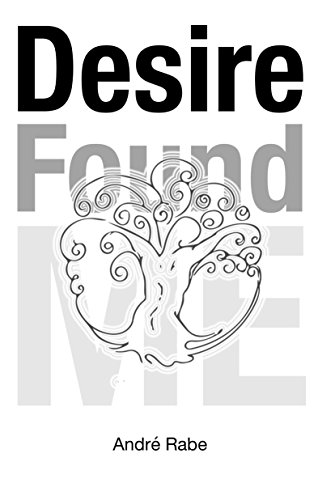
A few authors have written on similar topics, but André Rabe's recent book, Desire Found Me, provides a very thorough exploration of how mimesis impacts not only atonement, but a variety of fundamental Christian theological points. His is an incredibly ambitious project, not just describing a mimetic atonement, but laying a foundation of how mimesis provides a better explanation of Scripture all the way back to Genesis 1.

Some might think this foundation is too much. To be fair, it can be a lot to digest, although he makes fine theological points accessible (with appropriate background) to those unfamiliar with the topics, while also not being overly simplistic for those with more knowledge of some topics (his writing structure makes it is easy to skim where appropriate). However, discussing things such as human nature, justice, and even Satan are critical to understanding and constructing a theory of atonement. Even while being familiar with and having written on many of these topics, Rabe provides helpful strong evidence and detailed explanation supporting more accurate Christ-centered interpretation of Scripture than other more human-centric hermeneutics. He provides a nice balance of his own writing with strong citations showing a solid scholarly approach to Scripture, hermeneutics, and Christian history.

For those interested in mimetic atonement, restorative justice, and love-centered reading of Scripture that is more cohesive than the limited narratives told by so many others, I highly recommend Rabe's text.

Disclosure of Material Connection: I received this book free from the publisher. I was not required to write a positive review. The opinions I have expressed are my own. I am disclosing this in accordance with the Federal Trade Commission’s 16 CFR, Part 255: “Guides Concerning the Use of Endorsements and Testimonials in Advertising.”

Monday, April 27, 2015

Book Review: The Challenge of Desire

Desire can be controversial in the Christian world. The ascetic movement shunned desire, and a lot of American Protestantism followed the lines of Puritanism and the Victorian Era of strict self-control. There's something to be said for self-control, of course. Psychology, as well, has a lot to say on desire, with many theories focused on how to shape desire and how drives create problems. Yet modern psychological and theological research and trends have focused on the importance of desire as part of our lives that should not be ignored.

Wanting, longing, and ambition can be great drivers of progress toward God's will. They can also wreck great havoc throughout our lives and the world, of course. Balance is the key. Jen Pollock Michel's book, Teach Us to Want: Longing, Ambition, and the Life of Faith, appears on the surface to follow this line. In many ways, modern American Christians need to be taught to want. Or more accurately, taught to recognize their desire. As it was recognized as Christianity Today's 2015 Book of the Year, I had high hopes.

I firmly believe that God places desire in our hearts for a reason, but identifying the desire and pursuing it with balance can be a major challenge. Unfortunately, I didn't hear this in Michel's words. Rather, much of the book is comprised of lessons about who God is and the things God wants. There was a strong neo-Calvinist refrain throughout, emphasizing the importance of seeing God's sovereignty. Frankly, not much focus on true desire around here.

Toward the end of the book, she finally explicitly said what I had suspected was her thesis: "Holiness... will revise our personal desires." Like many of the neo-Calvinists of today, there is a focus on behavioral "holiness," conforming to certain beliefs about how God wants us to act. This explains her long theological diatribe--set our strong doctrine with which to align ourselves, then our behaviors will follow as holiness, and then our desire will be conformed to God.

This book is not really asking God to teach us to want, but rather to want what he wants. Wanting what God wants is not bad, of course; it is the prayer of many (most? virtually all?) followers of the Lord. However, there is a danger to emphasizing this approach in American Christianity--we've been consistently told our desires are bad, and we must ignore them and want what God wants, which usually matches certain rigid doctrinal statements.

The problem is that this leads to us ignoring, avoiding, and repressing our honest desires. This is not how to appropriately manage them, even if they're problematic. Rather, honestly acknowledging desire is the first step in evaluating whether we should act on it. And what about the possibility that God placed a desire and passion in us to move the world forward? Isn't that part of the role of the Holy Spirit? The answer is not necessarily to reshape our desires, but rather identify true, gut-level, core desire that drives our hearts and souls. These are not impulsive desires, but rather the soul longing. That is the want we need to be taught to recognize.

The saving grace of this book is the narrator, Karyn O'Bryant. She read it with emotion and inflection as if it was her own argument. She made the audiobook engaging.

Disclosure of Material Connection: I received this book free from the publisher. I was not required to write a positive review. The opinions I have expressed are my own. I am disclosing this in accordance with the Federal Trade Commission’s 16 CFR, Part 255: “Guides Concerning the Use of Endorsements and Testimonials in Advertising.”
Monday, March 23, 2015

Review: The Centrality of Fringe Hours @JessicaNTurner @christianaudio

The Fringe Hours: Making Time for You was one of the best nonfiction audiobooks I've listened to in a while. Jessica Turner essentially writes about self-care in the midst of a busy life.

I know a lot about self-care. I've read/listened to several books on the topic. I've taught it and reinforced it in therapy and parent education groups. I still suck at it, but I'm familiar with the topic. This is one of the most down-to-earth, practical, realistic, reflective, and emotionally-connected books on the topic.

Probably the highest praise I can give for it is that somehow it actually resulted in my making some small changes in my activities, even before the book was over, to improve my self-care. The concept of fringe hours (finding bits and pieces of time throughout the day) was not terribly novel to me. I've very good at planning well ahead and being quite efficient. But I think the key that was most helpful in this text was helping me be even more aware of the prioritizing of activities, especially those that are meant to be for fun.

I think one of the strengths of this book was that it is not prescriptive nor guilt-inducing. Rather, it provides many different frames on life, time, and our choice of activities that can likely reach a variety of readers. Turner offers several practical examples of how to use time effectively to bring ourselves life. She makes a compelling picture of the centrality of making time for ourselves without overspiritualizing or overpsychologizing it while balancing that with strong substance.

My biggest criticism is that this book is really targeted toward women. It says so in the description, and the language used throughout the book reinforces that frame. Turner talks about tendencies in women, but they were all descriptive of me. As a psychologist, I don't see these trends as being unique to women, albeit there are some social pressures to conform into certain patterns. However, she may be unintentionally reinforcing some gender stereotypes. More importantly, by framing this text only in terms of women, she may have lost a massive audience who just as desperately needs to use their fringe hours (actually, I need it FAR more than my wife). But if men can get over the feminine pronouns, it can still be quite useful.

Finally, Carla Mercer-Meyer does a superb job of narration. My common complaint of nonfiction audiobooks is that they're often not read by the authors, so there's a sense of passion and personality that's lost. However, Mercer-Meyer conveys both so well that she could have been mistaken for the author. It was one of the best (if not the best) narrated nonfiction audiobook I've listened to (and there's many on my list).

Disclosure of Material Connection: I received this book free from the publisher. I was not required to write a positive review. The opinions I have expressed are my own. I am disclosing this in accordance with the Federal Trade Commission’s 16 CFR, Part 255: “Guides Concerning the Use of Endorsements and Testimonials in Advertising.”

Monday, March 16, 2015

Book Review: Ordinary: Extraordinarily Bad

With a lot of my interest in valuing the Brother Lawrence-esque approaches to life, I was eager and hopeful to read Ordinary: How to Turn the World Upside Down. The book description is very much in line with what I like to emphasize:
What if the path toward an extraordinary life is becoming more ordinary?
Ordinary is not a call to be more radical. If anything, it is a call to the contrary. The kingdom of God isn’t coming with light shows, and shock and awe, but with lowly acts of service. Tony Merida wants to push back against sensationalism and “rock star Christianity,” and help people understand that they can make a powerful impact by practicing ordinary Christianity.
Through things such as humble acts of service, neighbor love, and hospitality, Christians can shake the foundations of the culture. In order to see things happen that have never happened before, Christians must to do what Christians have always done­. Christians need to become more ordinary. 
Let’s think together about how we, ordinary people, doing ordinary things, might turn the world upside down.
However, the book is minimally about the value of ordinary things. Rather, it is really a rather legalistic argument for some social acts with a lot of assumptions, offensive statements, and bad theology. Sadly, the narration made the entire book sound like a dry speech rather than something with passion and life behind it.

The biggest problem I had with this text was Merida's reasons for loving others. In biblical Christianity, we love others because we are infused with the love of God and this is the fundamental frame with how we approach other people. However, Merida asks us to love people to meet Jesus’ commands, to be able to preach the Gospel explicitly, and to show the world that Christians are not all that bad. These are not the reasons Jesus asks us to love our neighbor. They may be added benefits, but if we do "good works" for these reasons, we functionally doing the acts for manipulative purposes, and we will hurt and damage other people.

This is where he gets into some of his offensive framings. Some examples:

  • He talks about foster care not costing anything financially and actually coming with financial incentives. While technically true, we shouldn't even be discussing this if we're approaching foster care out of divine compassion. Having worked with plenty of foster families, I've seen some who essentially do it for the allowance. It's incredibly damaging. Those who foster for the right reasons wind up spending plenty of their own money.
  • Merida horribly adds stigma to foster youth when he explains that foster youth often age out with only $500, which doesn’t last long, so that is why, he argues, that it's not surprising that many former foster youth turn to crimes, gangs, and prostitution. He needs to do some accurate research and recognize the implications of sharing uninformed slices of the lives of the voiceless. This statement does nothing to help the situation and likely only damages a very difficult system.
  • He also adds stigma to prisoners. While encouraging readers to welcome prisoners into their homes, he explains how one family told the prisoner he could not be at home without another member present, and the father told his daughter to block the door with her dresser at night. This framing just reinforces negative (and often inaccurate) stereotypes about the untrustworthy and dangerous nature of former prisoners.
  • Merida sounded self-congratulatory about adopting a fifth child from Ethiopia after four adoptions from the Ukraine: Their reason for adoption was because "We had enough love in our hearts." He talked about the need to rescue children as fundamental to adoption. Later, he calls adoption the "Cinderella doctrine of Pauline doctrine." As being a proud adoptive parent, this is the kind of approach to adoption that stigmatizes adoption and causes true psychological damage in adoptees.
  • On a related note, his cultural insensitivity is astounding. He told stories of his Ukrainian-born son wanting a "sun tanned" brother (referring to his Ethiopian heritage) without recognizing the potential problematic interpretation. I don't blame the child; but this is a learning moment, even if to the reader only. He also talks later about his Ethiopian-born child not wanting to eat salad and thinking of his own mother's response to his asking why he needed to eat food: Because there are starving children in Africa. Rather than talking about how international adoption has opened his worldview and challenged his assumptions, he casually states, "Well, I guess that's not always true."
Merida also states things that are just wrong, both socially and theologically, that contribute to stigma and culture wars. Towards the end of the book, he asserts that despair is one of the greatest sins. This is one of the most psychologically harmful statements Christians make. And there's not legitimate theological support for it.

He also states at the start of the book about tolerance being problematic because we should not agree with others in the name of tolerance. Except tolerance is not agreement. It is simply acknowledging differences and allowing differences to exist without trying to force the other person to change. By incorrectly stating that one must agree in order to be tolerant, Merida is effectively advocating for a homogenous culture.

Finally, he argues that a quote attributed to Francis of Assisi ("preach the Gospel always, and if necessary, use words") is wrong. Merida emphasizes that words are always required, as we much explicitly direct people toward Christ. Some Christians believe this, but I find this to be a legalistic, narrow interpretation of the Gospel that misses its true heart, along the lines of the start of this review.

Ultimately, the book title and description is completely misleading. Merida argues that any ordinary person can engage in acts that some may call social justice (I have a hard time calling what he's saying social justice as the true justice component is missing, and there is a lot of social inaccuracies and offensiveness), but his whole book is about encouraging people to engage in prescribed activities that explicitly match biblical mandates.

In contrast, some of the central beauty of the Gospel is that lives (and even social systems) can be transformed by simply living life in a Christ-like way, loving people out of a fundamental character virtue stance of love and valuing of life and making simple decisions that contribute to systemic change that treats all people as made and loved by God.


Disclosure of Material Connection: I received this book free from the publisher. I was not required to write a positive review. The opinions I have expressed are my own. I am disclosing this in accordance with the Federal Trade Commission’s 16 CFR, Part 255: “Guides Concerning the Use of Endorsements and Testimonials in Advertising.”

Monday, July 28, 2014

Book Review: Grace for the Contemplative Parent #SpeakeasyContemplativeParents

One of the spiritual formation concepts most dear to my heart is Brother Lawrence's practicing the presence of God. It is core to the Incarnational stream that Richard Foster describes in Streams of Living Water and feels like my spiritual home. For these reasons, Lily Crowder's book, Grace for the Contemplative Parent: A Practical Guide for Mothers Practicing the Presence of God caught my attention.

Crowder does a nice job of applying Brother Lawrence's concepts to the daily life of parenting. She will also probably make many mothers feel quite validated through struggles of the daily grind of life with kids. The points were good and could be powerful, although I didn't feel like there was anything particularly new in what I heard, even though I need to remember to give myself room for grace in many of these same circumstances. Many of the ideas were similar to ones I have conveyed to parents during the course of family therapy, which was validating to me, but not necessarily helpful in my own growth. Since I can still struggle with practicing God's presence, I was hoping this book would give me some new outlook that would translate to transformation. One of my reflections during the book was remembering that insight doesn't necessarily lead to behavior change. Learning something new about ourselves and the world is good and important, but sometimes we need practical skills to actually experience something different.

Even though the main title is "parent," the subtitle is "guide for mothers," and Crowder acknowledges early on that these principles are relevant to all parents, but she is targeting mothers. This is my biggest complaint. During our adoption process, almost all adoption resources were targeted at mothers (you'd be amazed at how many were pink and literally flowery--and my wife doesn't really like either). I felt really left out and invalidated, and I was just as active. Most parenting resources are similarly targeted toward mothers. Thankfully, there is increasing recognition that fathers are often active (and important) in parenting. I don't think it would have been that difficult to make this book more inclusive of fathers, and it would open up another huge audience. And believe me, fathers need grace, as well.

Disclosure of Material Connection: I received this book free from the publisher. I was not required to write a positive review. The opinions I have expressed are my own. I am disclosing this in accordance with the Federal Trade Commission’s 16 CFR, Part 255: “Guides Concerning the Use of Endorsements and Testimonials in Advertising.”
Questions?

Got a question, struggle, or doubt you'd like to see addressed here? Contact me, and I'll try to discuss it (and may even help you get an answer).