Showing posts with label Desire. Show all posts

Monday, June 8, 2015

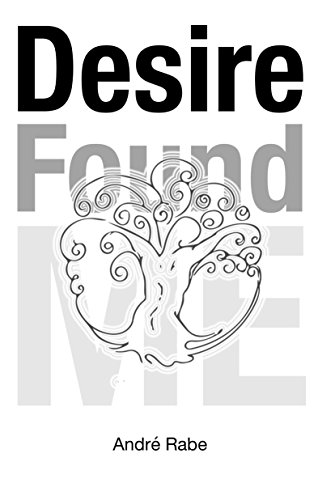
Review: Desiring Atonement

Atonement can sound like a boring, droll topic (and it is to many people). However, it's also central to Christian theology and the topic of many vicious debates (some people's ordinations and even salvation statuses have been questioned due to even minor differences in atonement beliefs). For those not familiar, atonement in Christianity refers to becoming reconciled with God. I have previously written on atonement, including problems with "traditional" atonement theories, the application of René Girard's mimetic theory to Christian atonement, and the fundamental question of whether God needs to be appeased.

A few authors have written on similar topics, but André Rabe's recent book, Desire Found Me, provides a very thorough exploration of how mimesis impacts not only atonement, but a variety of fundamental Christian theological points. His is an incredibly ambitious project, not just describing a mimetic atonement, but laying a foundation of how mimesis provides a better explanation of Scripture all the way back to Genesis 1.

Some might think this foundation is too much. To be fair, it can be a lot to digest, although he makes fine theological points accessible (with appropriate background) to those unfamiliar with the topics, while also not being overly simplistic for those with more knowledge of some topics (his writing structure makes it is easy to skim where appropriate). However, discussing things such as human nature, justice, and even Satan are critical to understanding and constructing a theory of atonement. Even while being familiar with and having written on many of these topics, Rabe provides helpful strong evidence and detailed explanation supporting more accurate Christ-centered interpretation of Scripture than other more human-centric hermeneutics. He provides a nice balance of his own writing with strong citations showing a solid scholarly approach to Scripture, hermeneutics, and Christian history.

For those interested in mimetic atonement, restorative justice, and love-centered reading of Scripture that is more cohesive than the limited narratives told by so many others, I highly recommend Rabe's text.

Disclosure of Material Connection: I received this book free from the publisher. I was not required to write a positive review. The opinions I have expressed are my own. I am disclosing this in accordance with the Federal Trade Commission’s 16 CFR, Part 255: “Guides Concerning the Use of Endorsements and Testimonials in Advertising.”

Monday, April 27, 2015

Book Review: The Challenge of Desire

Desire can be controversial in the Christian world. The ascetic movement shunned desire, and a lot of American Protestantism followed the lines of Puritanism and the Victorian Era of strict self-control. There's something to be said for self-control, of course. Psychology, as well, has a lot to say on desire, with many theories focused on how to shape desire and how drives create problems. Yet modern psychological and theological research and trends have focused on the importance of desire as part of our lives that should not be ignored.

Wanting, longing, and ambition can be great drivers of progress toward God's will. They can also wreck great havoc throughout our lives and the world, of course. Balance is the key. Jen Pollock Michel's book, Teach Us to Want: Longing, Ambition, and the Life of Faith, appears on the surface to follow this line. In many ways, modern American Christians need to be taught to want. Or more accurately, taught to recognize their desire. As it was recognized as Christianity Today's 2015 Book of the Year, I had high hopes.

I firmly believe that God places desire in our hearts for a reason, but identifying the desire and pursuing it with balance can be a major challenge. Unfortunately, I didn't hear this in Michel's words. Rather, much of the book is comprised of lessons about who God is and the things God wants. There was a strong neo-Calvinist refrain throughout, emphasizing the importance of seeing God's sovereignty. Frankly, not much focus on true desire around here.

Toward the end of the book, she finally explicitly said what I had suspected was her thesis: "Holiness... will revise our personal desires." Like many of the neo-Calvinists of today, there is a focus on behavioral "holiness," conforming to certain beliefs about how God wants us to act. This explains her long theological diatribe--set our strong doctrine with which to align ourselves, then our behaviors will follow as holiness, and then our desire will be conformed to God.

This book is not really asking God to teach us to want, but rather to want what he wants. Wanting what God wants is not bad, of course; it is the prayer of many (most? virtually all?) followers of the Lord. However, there is a danger to emphasizing this approach in American Christianity--we've been consistently told our desires are bad, and we must ignore them and want what God wants, which usually matches certain rigid doctrinal statements.

The problem is that this leads to us ignoring, avoiding, and repressing our honest desires. This is not how to appropriately manage them, even if they're problematic. Rather, honestly acknowledging desire is the first step in evaluating whether we should act on it. And what about the possibility that God placed a desire and passion in us to move the world forward? Isn't that part of the role of the Holy Spirit? The answer is not necessarily to reshape our desires, but rather identify true, gut-level, core desire that drives our hearts and souls. These are not impulsive desires, but rather the soul longing. That is the want we need to be taught to recognize.

The saving grace of this book is the narrator, Karyn O'Bryant. She read it with emotion and inflection as if it was her own argument. She made the audiobook engaging.

Disclosure of Material Connection: I received this book free from the publisher. I was not required to write a positive review. The opinions I have expressed are my own. I am disclosing this in accordance with the Federal Trade Commission’s 16 CFR, Part 255: “Guides Concerning the Use of Endorsements and Testimonials in Advertising.”

Wednesday, December 15, 2010

The Pursuit of Holiness is Pharasaical Self-Righteous Perfectionism @christianaudio @caReviewers

I recently received a complimentary copy of Jerry Bridges' audiobook version of The Pursuit of Holiness in order to review it (without any expectation of a positive review, as will be obvious here :) ). I had several theological problems with this book that bleed over to the larger issues of some of holiness movements. Let's go through these by way of some of Bridges' central points:


Factual certainty is central to faith. This, I think, is one of the most damaging elements of this book. At the same time, it was one of the most helpful to me, as it elucidated why so many people are obsessed with sin and the purging of sin: It helps certainty of salvation (more on this later).


Bridges states, "Faith must always be based in fact." I'm not sure where he gets this idea, as it's not biblical or humanly defined. Hebrews 10:1 defines faith as being certain, but based on what we hope for and cannot see. As emphasized by the positivist and empiricist movements, fact is really based on what can be observed by humans. That does not meant there is no fact of God. It means that there does not have to be proof in order to have faith. In fact, faith is more powerful without fact.


Secular definitions also define faith as not being based in fact. Wikipedia's first sentence in the article on faith states, "Faith is the confident belief or trust in a person, idea, or thing that is not based on proof." Other definitions of faith have more to do with the general idea of belief or trust, not necessarily rooted in fact.


This blog is devoted to people's struggles with faith, usually based on their reliance on facts that end up being unsupportable or not as they originally thought. Just because the facts disappear does not mean God or our faith have to disappear.


Reason must contain and control desire. Bridges rightly explains that our desires can be impure and lead us down some terrible roads. Therefore, he argues that we must always use our reason to contain our sinful desires. Reason is a very good thing, but it can also lead us astray. As a psychologist, I frequently see the reason-based defense of rationalization used to dissociate someone from their emotions and therefore move them away from truth.


Ransomed Heart Ministries is based on the premise that once we give our lives to Christ, he gives us a new, good heart. Heck, even the more conservative and sinlessness-driven John Piper's ministry is called Desiring God. We must listen to our desires. Yes, they may mislead us, but if we pay good attention to them, we will hear God speaking to us. Frankly, God speaks to us more through our emotions than through our intellect.


Holy is defined by sinlessness. Bridges states that holiness is "separation from impurity and moral evil." This is one of the biggest and most dangerous bad definitions in Christianity. A few months ago, I talked about how holy and sinlessness are not one in the same. Holiness can include sinlessness, but it is not defined by it. Rather, a better definition of holy is sacred, meaning set apart. Avoiding sin is one way to be set apart, but holiness is a lot more than that.


Granted, Bridges later says that holiness is in a broader sense "obedience to the will of God in whatever God directs," but by the content of his book, he clearly focuses on God's will being that we lead sinless lives.


One of the reasons this perspective can be dangerous is that it can lead us to assume that God dislikes us. Jonathan Brinks recently posted an article related to a video by Skye Jethani, exploring how God views us in the midst of sin. The answer: God loves us. When we forget that, our relationship with God becomes strained because we no longer trust him. But usually that's not our fault, but rather the fault of the Church. 


Sinlessness is the evidence of salvation. Bridges states partway through his book, "The only evidence of salvation we have is a holy life." Based on his definition of holy, this would mean sinless. Besides the fact that no person will ever be sinless on earth (Bridges notes this), this idea is simply not biblical. He argues that the Holy Spirit helps us become sinless.


Yet in Galatians 5:22-23, Paul states the fruit of the spirit is "love, joy, peace, patience, kindness, goodness, faithfulness, gentleness, and self-control." Do these correlate with sinlessness? Some do. But these indicate something much more than the absence of sin. They emphasize the presence of love. Frankly, most of these emphasize desire and emotion and not reason, contrary to Bridges earlier point about reason trumping emotion.

Finally, this brings us back to the idea of the role and motivation of factual certainty. It seems this whole book (and I would argue much of people's obsessions with sin) is focused on the need to be confident in their own salvation. This is definitely an understandable concern: We don't want to wonder if we'll be in Heaven. We want proof. So we look for it in various ways.

One of the ways is emphasizing a "pure," sinless life. Like the Pharisees, we can become self-righteous if we lead sinless lives, being certain of our salvation. But just like the Pharisees, it is at this time that we are the farthest from God, missing the true hope of salvation in a relationship with Christ.

Tuesday, December 14, 2010

The Importance of Calling @garybarkalow @David_C_Cook

Gary Barkalow was a central player in Ransomed Heart Ministries until he realized his calling was to focus more on helping people find their calling. As part of that mission, he founded The Noble Heart, a ministry to aid people in developing their insight into their calling. Recently, he released his first book, It's Your Call, which I got to receive a complimentary copy of to review.

I was excited about the book because I love Ransomed Heart, really appreciated Barkalow's brave venture to follow his call, and also want to aid people in their search for meaning and purpose in life (although this is slightly different from calling).

Barkalow's book definitely has strong elements of the central principles of Ransomed Heart, namely that we need to pay attention to our heart with its glory and our deepest desires, as they are God's way of letting us know our true calling. For instance, on page 138, he states, "Desire or passion is not a deterrent to our walking with God and discovering our calling; it is the means to both." I'm curious if Barkalow influenced John Eldredge in this regard, if Eldredge influenced Barkalow, or if they just found each other through God. The language each uses to describe the power of the heart is similar, so I can see how Barkalow was a good fit with that team. That means that if you like Ransomed Heart and Eldredge's work, you'll likely appreciate Barkalow's work.

The book is easy to read with a deep, yet conversational style. Barkalow stated he originally had a lot of difficulty getting published. Based on the final product, I don't know why! :) While reading, there were several times I highlighted various phrases that were particularly powerful. This honestly doesn't happen all that often in books I read; in some ways I can judge how much I engage and love a book by the number of folded pages to mark a quote! This book has a lot of those.

Many of the highlights were of personal note and reminder to myself. One of the more generally relevant ideas, though, was that calling can and does come to us over the course of a journey that may or may not include our career or a formal ministry.

I often say that my career as a psychologist is my ministry, and that is true. Although I also struggle with wondering if my particular position right now is what my true calling is. I often yearn for something more. Barkalow points out that God may be developing us in this moment for something later on. He has some great stories from his own life about exactly this.

In particular, our particular positions may be being used by God to remind us that particular positions do not fulfill a calling. Those positions may simply be roles or assignments that may work in alignment with our calling, but do not equal the calling. On page 82, Barkalow states:
By staying aware that life consists of our calling, our roles, and our assignments, we can be free from the fear of having to create a career path or being stuck in a field of work/experience or limiting titles. We can move as God directs us and as our lives change, take the effect of our lives wherever we go. This is living in your calling.
This is so important. Oftentimes, we can get stuck focused in a career or title, thinking that is our calling, when our calling is much more important. In many ways, this idea reminds me of Christ's words of losing our life so we can gain it: When we let go of the life we think we are supposed to have, we will gain the life God has intended for us.

Additionally, Barkalow emphasizes that formal ministry is not always helpful. Rather, he says that "impact is not exclusive to or guaranteed by working in ministry (a church or nonprofit, philanthropic, or mission organization). I have known many who had to leave a ministry to find their ministry" (p. 121). For those of us who do have a heart for a formal ministry, we need to remember to not get too tied to it. It may actually limit ourselves, our calling, and our God's work in us.

It's Your Call does not lay out any formula for finding one's calling or what our calling should look like. And that's a good thing. Meaning, purpose, and calling are not formulaic and cannot be prescribed. Barkalow does an excellent job emphasizing the organic nature of calling and how it can powerful transform lives.
Questions?

Got a question, struggle, or doubt you'd like to see addressed here? Contact me, and I'll try to discuss it (and may even help you get an answer).