Continuing my series on reflections on meaning, I want to consider the idea of tradition. Last week, I talked about the limited value I've increasingly seen in church services. I've reflected before that I have trouble understanding why people continue singing songs that sound like funeral dirges with affect that matches. Extreme structure and routine that is devoid of passion just doesn't strike me as compelling.
However, what seems to be a driving force for many is tradition. In various settings, I've heard people talk about being motivated to engage in an activity that others have done for decades, centuries, or millennia. Sometimes it's about doing the same thing others are doing at the same time around the globe. I find the latter more compelling because it emphasizes global unity, which is significant in many ways.
For one reason or another, I just have never been able to experience meaning or emotion connected to tradition. I've come to really appreciate some of the more historical images and processes, but not because of tradition; because of knowing that each element of an icon is intentionally placed and means something. But structuring a service or singing a particular song because others have done it before us just isn't compelling to me.
Maybe it goes back to my sense of meaning needing a relational and/or transformational quality. I just don't see either happening attached to tradition for the sake of tradition. That doesn't mean tradition is bad, but sometimes we can get too rigidly attached to it because that's how we've always done it. Perhaps there's a more effective or meaningful way...
Monday, September 1, 2014


Monday, August 25, 2014
Meaning in Church
I put a lot of emphasis on meaning-making, for better or for worse. My heart feels at home with Viktor Frankl's logotherapy orientation, focused on meaning as the way to deal with psychological problems. And I pursued a career in psychology because I saw it having more meaning for me than other paths. So this will start a little series on reflections on meaning.
Most people would agree a major component of church and religion is to contribute to meaning. But how does it contribute to meaning? Does everyone even want meaning from church or its analogues?
When people think of church, they often think of certain songs and sermons. Style preferences can create great debate and even schisms. What I've come to realize over the years is that the "service" (I still don't like that word, thanks to the criticisms of it from the emerging church conversation) doesn't give much meaning to me. I can enjoy them, but they're not really transformative or filled with meaning.
Even in writing that sentence, I realize that central to meaning for me is some process of transformation. If no transformation of any kind occurs, can there be meaning? Songs and sermons can be stimulating in a variety of ways and encourage us to do things differently, but I have a hard time believing that they are the primary drivers of true change.
Relationships cause change. Change occurs within relationships. This is the core of the interpersonal approach to psychotherapy, which has some strong evidence base. Church services really aren't about relationship, for better or for worse.
It's been many years since I've felt like I've found much meaning in that hour (or so) on Sunday mornings, and it's not for lack of good music and speaking. I have found much more meaning in conversations, discussions, and ways of living life together.
Where do you find meaning in your faith practice? Not enjoyment, pleasure, or confidence, but actual meaning that's long-lasting?
Monday, August 18, 2014
Violence Against the Other
The news lately has not been pretty. News in general is rarely happy, as trauma tends to be more sensational and better for headlines than generosity, grace, and love. But it's been extra bad, at least in my perception.
Neighboring countries bombing one another. Children being beheaded because they're of the wrong tribe/religion. Women being stoned because they didn't follow the right religious observance. Police wearing military gear against the communities they were sworn to protect.
What is with the lack of value of human life?
Even in my attempt at downtime, a fictional audiobook I'm listening to is focusing on lynchings in the South in the early 20th century. Why is our history (and present) so focused on killing the Other? Not just ostracizing, shaming, or trying to change the Other (all of which can be bad enough), but flat out destroying them?
I keep coming back to my reflections when I preached last month. The title of my sermon was Identity in Love, and my thought was that it has to do with our identities. When our identities are tied up in tribes, which are focused on sameness, then difference becomes a threat to who we are. Since that sermon, I keep seeing this pattern over and over across cultures and time.
Is there another explanation? If this idea of how we form our identity is at least a piece of the cause of violence against the Other, then how do we promote this kind of identity formation? It's beyond the prosocial behavior building promoted by positive psychology (which I think is wonderful). Identity is deeper than behavior, at least in my view. Spiritual formation seems to start getting in to some of that, as a core idea of spiritual formation is identity, at least spiritually. But most spiritual formation tends to be very individualistic.
It seems what we need is a new corporate identity. We need to change culture. I guess that starts with individuals, but it doesn't seem to be happening quickly enough...
Monday, July 28, 2014
Book Review: Grace for the Contemplative Parent #SpeakeasyContemplativeParents
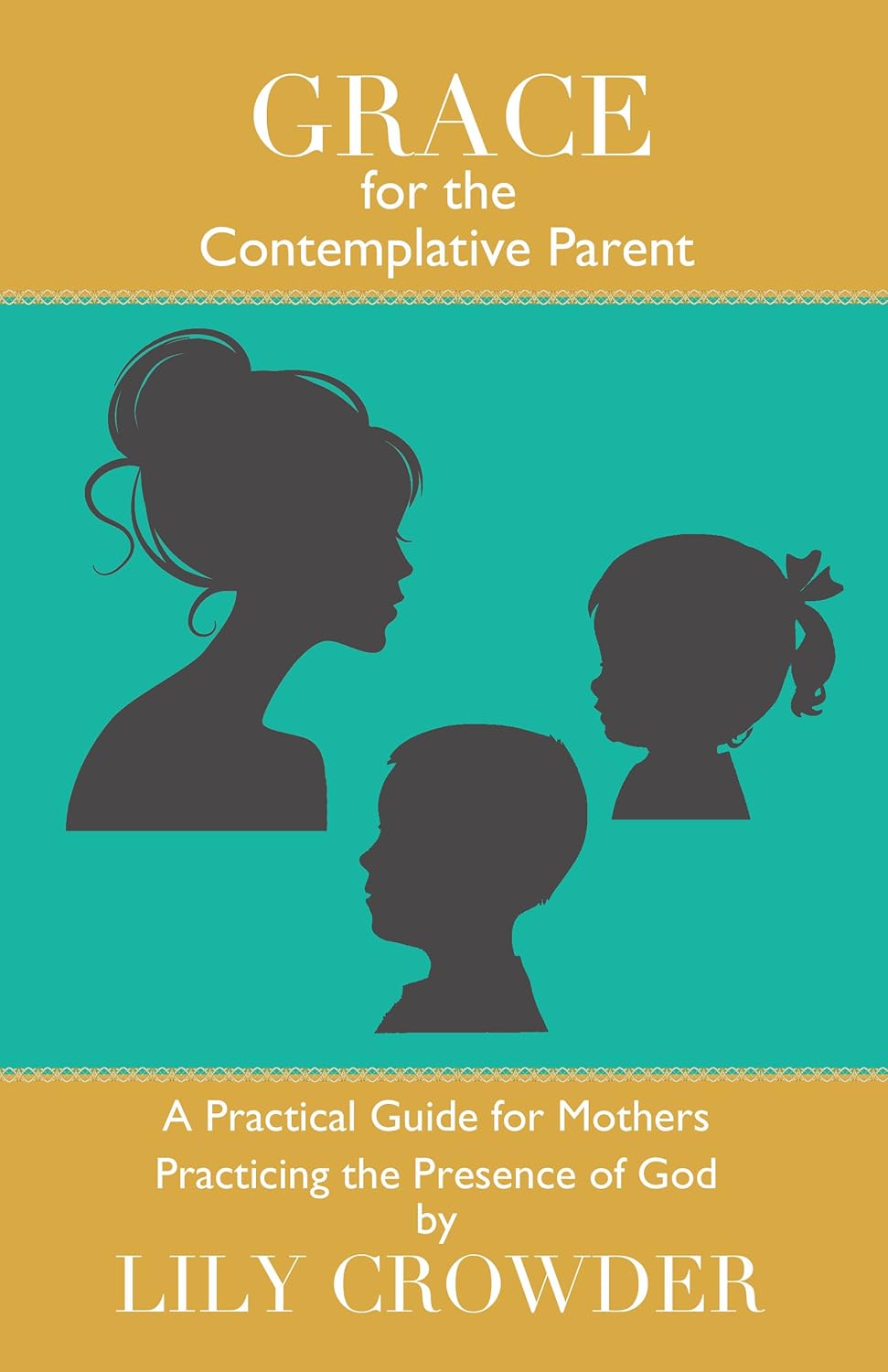
Crowder does a nice job of applying Brother Lawrence's concepts to the daily life of parenting. She will also probably make many mothers feel quite validated through struggles of the daily grind of life with kids. The points were good and could be powerful, although I didn't feel like there was anything particularly new in what I heard, even though I need to remember to give myself room for grace in many of these same circumstances. Many of the ideas were similar to ones I have conveyed to parents during the course of family therapy, which was validating to me, but not necessarily helpful in my own growth. Since I can still struggle with practicing God's presence, I was hoping this book would give me some new outlook that would translate to transformation. One of my reflections during the book was remembering that insight doesn't necessarily lead to behavior change. Learning something new about ourselves and the world is good and important, but sometimes we need practical skills to actually experience something different.
Even though the main title is "parent," the subtitle is "guide for mothers," and Crowder acknowledges early on that these principles are relevant to all parents, but she is targeting mothers. This is my biggest complaint. During our adoption process, almost all adoption resources were targeted at mothers (you'd be amazed at how many were pink and literally flowery--and my wife doesn't really like either). I felt really left out and invalidated, and I was just as active. Most parenting resources are similarly targeted toward mothers. Thankfully, there is increasing recognition that fathers are often active (and important) in parenting. I don't think it would have been that difficult to make this book more inclusive of fathers, and it would open up another huge audience. And believe me, fathers need grace, as well.
Disclosure of Material Connection: I received this book free from the publisher. I was not required to write a positive review. The opinions I have expressed are my own. I am disclosing this in accordance with the Federal Trade Commission’s 16 CFR, Part 255: “Guides Concerning the Use of Endorsements and Testimonials in Advertising.”
Monday, July 21, 2014
Audiobook Review: Love Walked Among Us

Unfortunately, that's where my praise stops, although I have to say at the outset that it was very difficult to pay attention to the content. I repeatedly have said that I love it when the author reads his/her own work when it's nonfiction. Miller has good inflection and sometimes displays his passion. However, this very well may be the worst produced audiobook I've ever listened to. Miller's pressured speech and regular stumbles and misreadings made it very challenging to listen to. I love audiobooks and listen to them regularly, plus my wife has narrated and edited some audiobooks, so I have some familiarity with the production process. Stumbles are normal, but that's what going back and re-recording the line and editing is for. The narration was so bad I actually contacted the publisher to ensure I didn't accidentally receive a draft version. I was told they attempted to fix what they could but were unable to re-record.
The errors and narration were distracting in the way that a poorly written paper with frequent spelling and grammatical errors are distracting (at least to me), preventing the core message from coming through. When I could hear the content honestly, I'm not sure I really heard anything particularly new or challenging. There were some good lessons, but I think there's other resources that are more effective at sending this message.
The complaint I had about content was that Miller seemed to make regular assumptions about various things that are not always reasonable. I recall during one biblical example, he said something like, "Jesus thought..." Except that Jesus' thoughts weren't in the biblical narrative. We can guess what Jesus thought, felt, etc., but we need to acknowledge that we're speculating and cannot be absolutely sure. It is this type of presentation that leads to rigidity in theological interpretation. There are also times when he gets facts wrong about people and fields. For instance, he talked about how psychologists look to Freud as a source of wisdom and guidance. Sorry, Miller, psychologists largely haven't relied on Freud for several decades. These kinds of statements, along with the poor production, made the book lose credibility to me.
If you're interested in this book, read it, don't listen to it. I cannot recommend the audiobook version at all, and the content is just "okay" from my perspective...
Disclosure of Material Connection: I received this book free from the publisher. I was not required to write a positive review. The opinions I have expressed are my own. I am disclosing this in accordance with the Federal Trade Commission’s 16 CFR, Part 255: “Guides Concerning the Use of Endorsements and Testimonials in Advertising.”
Monday, July 7, 2014
Identity in Love
Yesterday, I had the privilege of giving the sermon at my church. The title was Identity in Love, exploring how the development of our moral identity formation makes a difference in justice and how we approach people, with the goal of the Gospel being to have our identities rooted in love. You can listen to it below or at http://fbcr.podomatic.com/entry/2014-07-06T13_31_38-07_00.
Monday, June 23, 2014
Do we need authority?
Our society (and many of our ideas) are based in authority. We structure our organizations around hierarchies of authority. We based decisions on documents we consider authoritative, often in a reified way. Much defense of the Bible seems more to do with an apparent need for a transcendent authoritative source.
But do we necessarily need such authority? Psychologically, it seems like we are soothed by making decisions based on such authority. Authority is a good way to bring differing opinions into alignment (or submission), but is that always a good thing?
The Society of Friends (Quakers) have no such structure of authority--anyone can bring up an issue, speak, etc. For decisions, they seek consensus. What would our society be like if we approached decisions and structure like that? It may take more time, but is that necessarily a bad thing, especially if we structured life around that extra time?
In my mind, this requires a greater tolerance for ambiguity. If we cannot tolerate ambiguity, authority is important to give a sense of structure and clear definition. But as many of us have experienced, those structures and clear definitions are not always that satisfying, meaning, or even accurate.
How would our faith be different if we didn't depend on "objective" authority so much? What if we relied more on communion with God and listening to the Holy Spirit?
Subscribe to:
Posts (Atom)